
How to Stop Bathroom Mirror Fogging in Fort Myers
Few bathroom annoyances are as persistent as bathroom mirror fogging . You finish a shower, reach for the towel, and find the mirror covered in a cloudy film just when you need it.
Fort Myers homeowners face this problem more often because Southwest Florida's humid air gives steam fewer places to go. The reliable fix combines better ventilation, a few daily habits, and the right mirror care. First, it helps to understand why condensation forms.
How to Reduce bathroom mirror fogging in a Fort Myers Home
A bathroom mirror fogs when warm, moist air meets its cooler glass surface. Shower water creates vapor, and that vapor condenses into tiny droplets on the mirror. The glass isn't producing moisture. It is simply the first cool surface where the moisture collects.
Outdoor humidity makes the problem harder in Fort Myers, especially during the warmer months. Opening a bathroom window may help on a dry, breezy day, but humid outdoor air can also add moisture. Your exhaust fan needs to move damp air outside instead of sending it into an attic, wall cavity, or another part of the home.
Air conditioning removes some indoor moisture, but it doesn't replace a bathroom exhaust fan. The moisture from one shower can still settle on mirrors, ceilings, painted walls, and trim before the central system removes it.
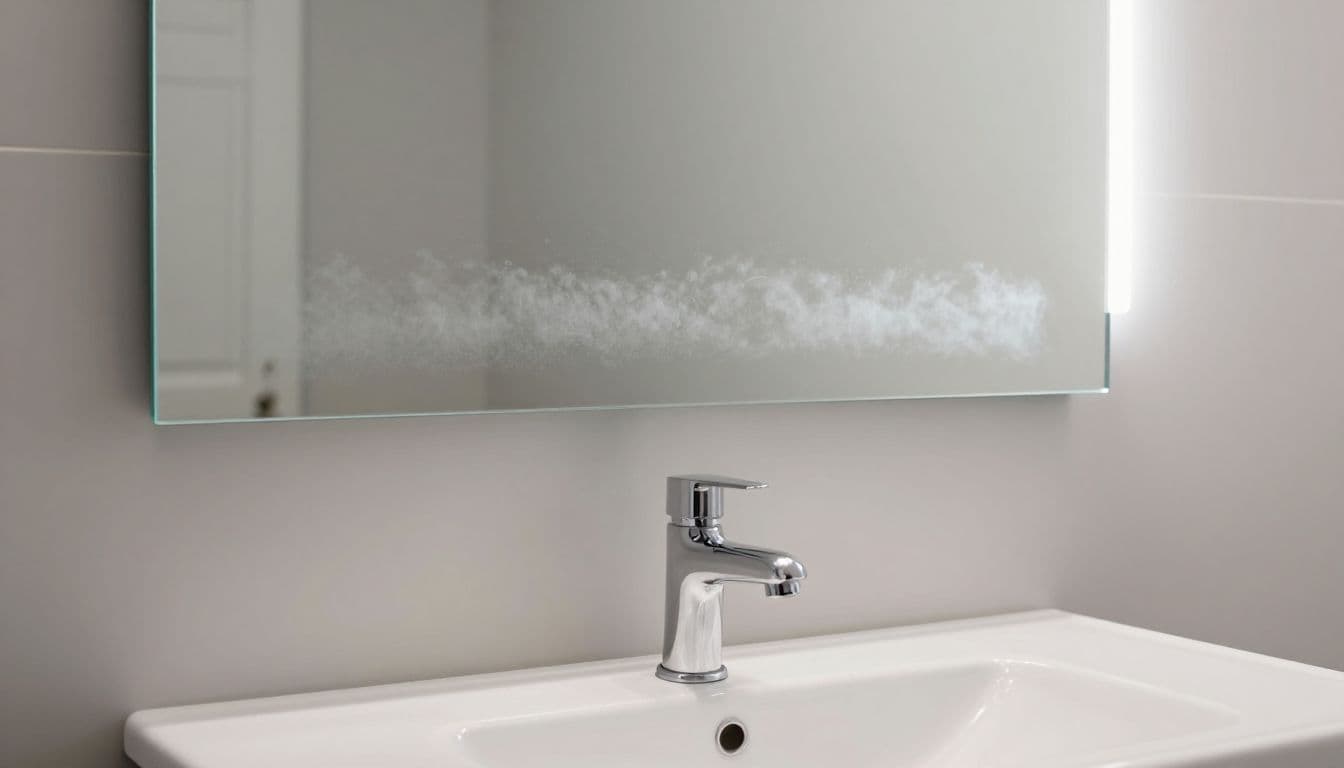
A foggy mirror immediately after a hot shower is normal. The concern starts when the glass stays wet for a long time or when condensation appears on other bathroom surfaces. Those signs point to poor air movement or excessive indoor humidity.
Hard water deposits can also make a mirror look cloudy after the moisture dries. Mineral spots don't cause fog, but they can leave a permanent-looking haze that regular wiping won't remove easily. Clean the surface before deciding that the mirror itself needs replacement.
Daily habits that keep your mirror clearer
Small changes can reduce the amount of steam reaching the mirror. They work best when you use them every time, rather than waiting until condensation has already formed.
- Run the exhaust fan during the shower and afterward. Keep it running for about 20 to 30 minutes after you finish. If the fan is loud, weak, or packed with dust, clean the grille and have its performance checked.
- Keep steam contained near the shower. Close the shower door or curtain while bathing when the layout allows it. This gives the exhaust fan a better chance to capture moisture before it spreads across the room.
- Lower the shower temperature slightly. Hotter water creates more steam. A modest temperature change can make a noticeable difference while keeping the shower comfortable.
- Leave the bathroom door open after use. This helps moisture disperse into the rest of the home. If someone needs privacy, open the door once the bathroom is unoccupied.
- Dry the mirror and nearby surfaces. Use a clean microfiber cloth or small squeegee after the shower. Removing moisture quickly prevents droplets from drying into mineral spots.
- Clean the fan grille regularly. Dust restricts airflow at the intake. Turn the fan off before vacuuming the grille, and don't remove electrical parts unless a qualified professional handles the work.
A fan that runs only while you shower may remove less moisture than you expect. The minutes after the shower are often when the bathroom is still releasing steam.
Because Fort Myers air can remain damp outdoors, don't depend on an open window alone. Use the exhaust fan first, then improve natural airflow when weather and privacy make it practical.
Safe DIY fixes for a clearer bathroom mirror
After improving airflow, clean the mirror thoroughly. Dust, hairspray, toothpaste, soap film, and hard water residue can make condensation look worse.
Use a soft microfiber cloth and a mirror-safe or ammonia-free glass cleaner. Spray the cleaner onto the cloth rather than directly onto the mirror. Liquid that runs into the edges can damage the backing or frame over time. Wipe in overlapping strokes, then dry the glass with a second clean cloth.
For mineral spots, follow the mirror manufacturer's cleaning instructions. A mild cleaning solution may help, but avoid abrasive powders, rough sponges, razor blades, and strong chemicals. They can scratch the surface or damage decorative finishes.
A commercial anti-fog spray made for bathroom mirrors can provide temporary help. Apply it exactly as the label directs, and test it on a small corner if the mirror has a specialty coating, painted edge, or decorative finish. Reapplication is usually part of using these products.
Some household hacks rely on shaving cream, oily soap, or other products that leave a film. They may clear a small area for a short time, but residue can attract dust and make cleaning harder. Use a product designed for mirrors when you want a temporary surface treatment.
A heated mirror offers a more lasting solution. Its heating element keeps the glass warmer than the surrounding air, which reduces condensation. Because these mirrors involve electrical connections, have a qualified installer handle wiring and follow the product requirements. Never tape a heating pad or heating foil to an existing mirror.
When bathroom mirror fogging points to a ventilation problem
If the mirror fogs heavily every time, the bathroom may need better exhaust capacity. Start with a simple observation while the fan runs. Hold a single sheet of toilet paper near the grille without pushing it into the opening. The airflow should pull the paper toward the grille. Weak or absent suction deserves further inspection.
Watch for these warning signs:
- The fan hums but moves very little air.
- Steam remains in the room long after the shower ends.
- The ceiling, walls, or light fixtures collect condensation.
- Paint peels, drywall swells, or trim begins to discolor.
- A musty smell or visible mold develops near the shower or ceiling.
- The fan vents into an attic or wall instead of outdoors.
- Condensation appears even after short showers.
A bathroom fan can lose performance because of a dirty grille, a blocked duct, a long duct run, too many bends, or a faulty motor. The exterior vent can also stick closed or become blocked by debris. Check an exterior termination only from a safe, accessible location. Don't climb onto a roof or open wiring to investigate it yourself.
A licensed HVAC or electrical professional can measure airflow, inspect the duct route, check the fan's installation, and recommend a properly sized replacement. Avoid covering the grille, painting over it, or installing a stronger fan without checking the existing ductwork. More fan power won't solve a duct that cannot carry the air outside.
A small hygrometer can help you track indoor moisture. If humidity stays above about 60 percent, look for other sources such as plumbing leaks, poor air conditioning performance, or inadequate whole-home ventilation. Persistent moisture affects more than your mirror.
When a new mirror or shower enclosure makes sense
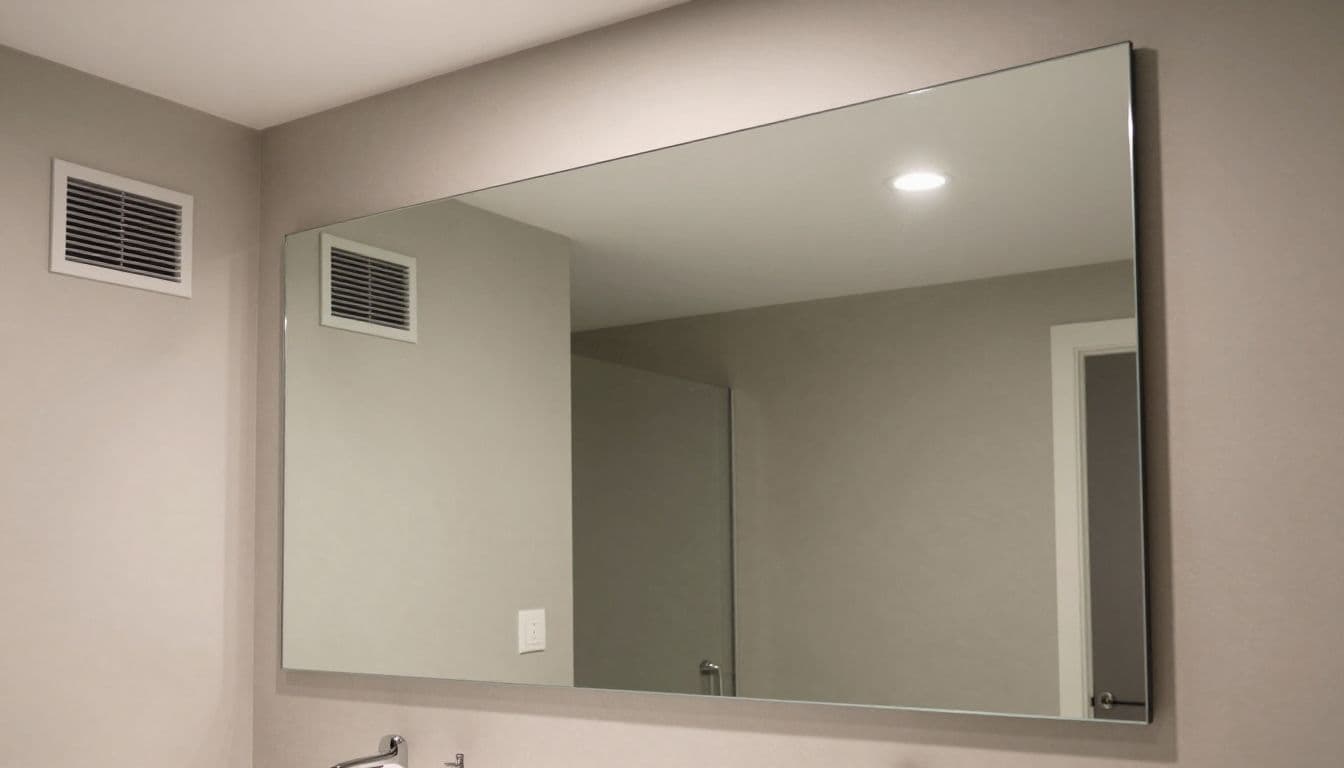
Ventilation should come first, but the mirror may also need attention. Replace a mirror when it has black edge spots, peeling backing, chips, cracks, or damage caused by moisture getting behind the glass. Cleaning won't reverse those problems.
A custom replacement can fit the vanity, backsplash, lighting, outlets, and wall dimensions more accurately than an off-the-shelf mirror. Before installation, review bathroom mirror height and placement tips so the new glass sits comfortably above the sink and remains easy to maintain.
If you want a fog-resistant upgrade, ask a glass professional about an integrated anti-fog or heated mirror. Discuss the power source, switch location, wall conditions, and access for future service before ordering. A custom mirror should match the room's electrical and mounting needs.
A shower enclosure can also improve moisture control when it keeps more steam near the exhaust fan. It won't remove the need for ventilation, but a properly fitted enclosure and door can limit how quickly steam spreads through the bathroom. Review custom glass shower enclosures when replacing a curtain or remodeling the shower area.
For a mirror that fogs only during showers, daily ventilation and careful cleaning may solve the issue. For damaged glass, a poor fan, recurring ceiling moisture, or a planned bathroom remodel, professional service is the safer path.
Conclusion
The fastest way to reduce bathroom mirror fogging is to control moisture before it reaches the glass. Run the exhaust fan during and after every shower, keep steam contained, clean the mirror with safe products, and dry lingering droplets.
Fort Myers humidity can make condensation more persistent, so pay attention to the room as a whole. If the mirror stays wet, the fan has little suction, or walls and ceilings show moisture damage, arrange a ventilation inspection before replacing the glass. A clear mirror starts with a bathroom that can move damp air outside.