
Storefront Damage Documentation for Cape Coral Claims
A broken storefront window creates an immediate safety problem, but cleanup can also erase evidence your insurer needs. Clear storefront damage documentation helps your Cape Coral business record what happened, what needs repair, and what you've spent.
Start with original records : dated photos, video, an itemized damage log, receipts, and written communications. Protect people first, then document the scene before conditions change whenever it's safe.
Key Takeaways for Business Owners
- Photograph the full storefront, individual openings, and damaged details before temporary repairs when conditions allow.
- Keep inventory losses, emergency expenses, repair estimates, and insurer communications together.
- Confirm your policy's requirements with your insurer, and have a glass professional assess the complete opening before ordering replacement materials.
Secure the Storefront Before Documenting Damage
Keep employees and customers away from cracked panes, hanging fragments, and exposed openings. Don't touch damaged glass, remove pieces from a frame, or force a door that binds. If there's an immediate threat to people, contact emergency services.
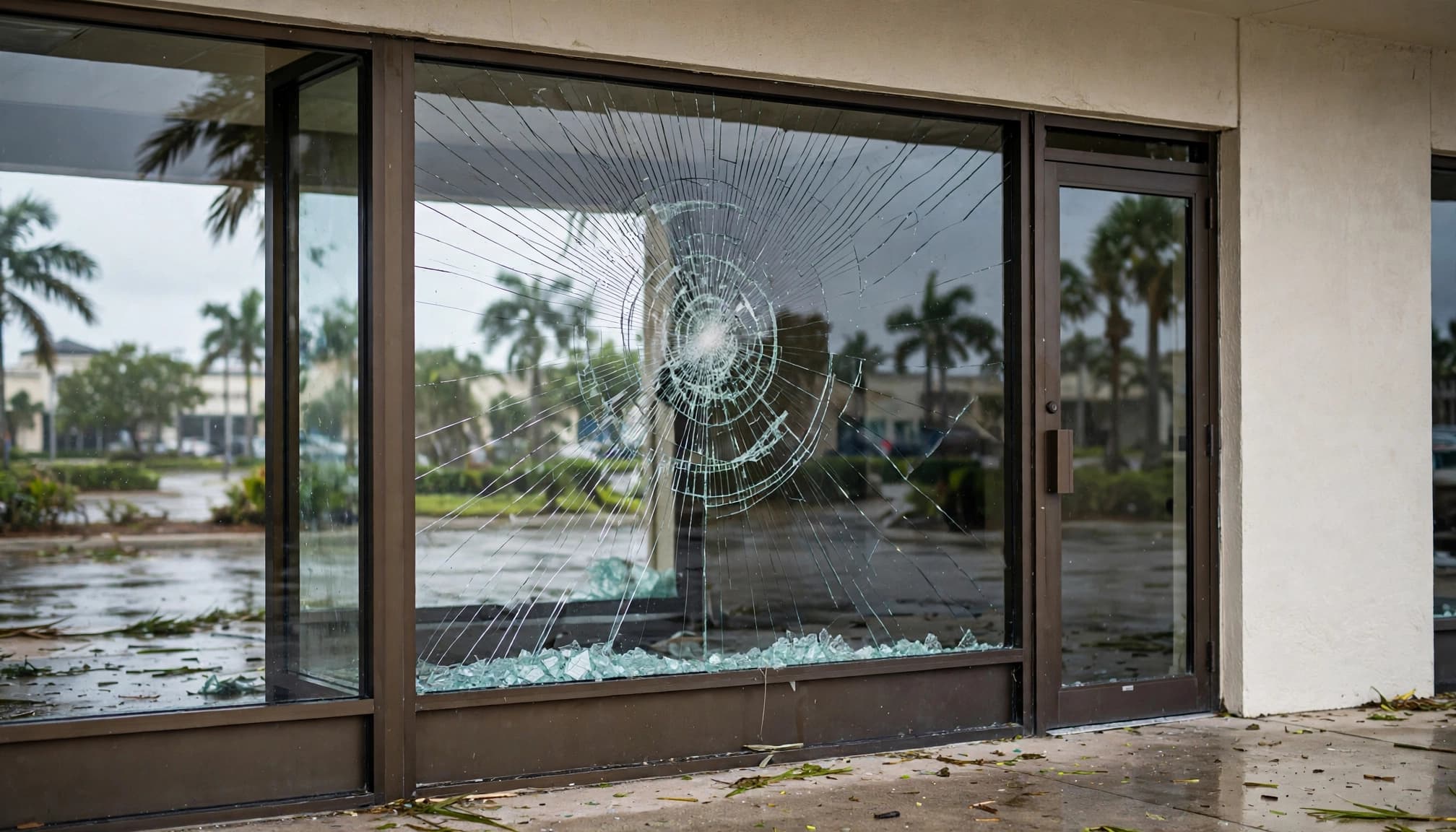
Notify your insurer promptly and ask about temporary protection, inspections, and documentation requirements. Also notify the landlord or property manager if you lease the space. Your lease and insurance policies may assign different responsibilities for storefront glass, building components, and business contents.
Arrange qualified help for securing the opening. Caloosahatchee Glass & Mirror provides Cape Coral commercial glass services, including storefront work.
When emergency work must happen before an inspection, record why it couldn't wait. Photograph the area from a safe distance before and after the work, and keep the contractor's invoice.
Capture Dated Photos and Video That Show the Whole Loss
Strong storefront damage documentation connects each close-up to a recognizable location. A tight photograph of a crack alone may not show which window needs replacement.
Photograph the storefront, then each damaged opening
Start with exterior views showing the business entrance and surrounding storefront. Next, photograph each affected window or door from inside and outside, where safe.
Capture cracks, missing glass, damaged glazing stops, bent frames, water marks, and affected hardware. Include manufacturer labels or glass markings when visible without approaching unstable glass. Photograph adjacent walls, flooring, display fixtures, and merchandise if they also show damage.
Record a slow video walkthrough to connect the individual photographs. Describe visible conditions without guessing their cause. Don't operate a damaged door merely to demonstrate a problem.
Preserve dates and original files
Check your phone's date and time settings before taking new images. Keep original files with their metadata, and record the photography date in your damage log. Distinguish that date from the incident date if you discovered the damage later.
Save unedited versions before making annotated copies. Messaging apps may compress images or strip metadata, so upload originals through the insurer's requested channel when possible.
Also preserve relevant security footage before the system overwrites it. Older storefront photos, installation invoices, and maintenance records can help document conditions before the loss.
Create Separate Damage and Inventory Records
A written log helps your adjuster connect photographs, estimates, and expenses. Use consistent descriptions for each opening throughout the claim.
Record glass, frames, and door hardware
Identify each affected opening by its location within the storefront. Record what you observed, when you discovered it, and which photo files show it.
Describe visible conditions plainly: cracked pane, missing fragments, loose trim, bent frame, or door that no longer closes properly. Keep observations separate from a technician's diagnosis.
Don't assume every problem came from the same event. Fogging between insulated panes can indicate seal failure, while corrosion and hardware wear may predate a storm. Photos alone can't confirm hidden frame damage or glass specifications.
Have the technician document findings, including whether glass-only replacement is suitable or the assembly needs broader work.
Itemize damaged business contents
List damaged merchandise, equipment, furnishings, and fixtures separately from the storefront. Include quantities, identifying details, purchase dates when available, and supporting invoices or inventory records.
Photograph each item before moving or disposing of it, if safe. Ask the insurer whether it needs an inspection before disposal. If hazards require immediate removal, document the reason and retain available disposal records.
For businesses with locations in Cape Coral, Lehigh Acres, or Punta Gorda, label every record by property address to prevent losses from getting mixed together.
Keep Receipts for Protection, Cleanup, and Business Disruption
Temporary protection and cleanup can generate several small invoices. Save each one, including receipts for professional board-up work, debris removal, and measures taken to limit further damage.
Record the service date, vendor, work performed, amount paid, and payment method. Keep proof of payment alongside the invoice because they document different things. A credit card statement may show a transaction without explaining its purpose.
Separate temporary measures from permanent repairs. If one invoice includes both, request itemized charges. Also keep estimates separate from final invoices so proposed costs don't appear as completed expenses.
If damage affects business operations, record closure dates, restricted access, canceled appointments, and additional operating expenses. Preserve sales reports and relevant payroll records if the insurer requests them.
Business interruption and extra expense coverage depend on policy language and the circumstances of the loss. Recording these impacts supports review; it doesn't establish that the insurer will reimburse them.
Request Repair Estimates That Describe the Complete Opening
A useful estimate explains the work, rather than listing only a replacement glass price. Accurate scope matters when comparing proposals and responding to an adjuster's questions.
Get an on-site assessment and itemized scope
Photos help a contractor prepare, but a technician needs to verify measurements, glass thickness, frame condition, and hardware. Caloosahatchee Glass & Mirror offers commercial glass services for businesses, including storefront installation, replacement, and repair.
Ask the estimate to identify the proposed glass, affected openings, removal, disposal, installation materials, and any frame or door work. Request separate pricing for unrelated upgrades.
Insulated glazing usually requires replacement of the sealed glass unit. Tempered glass must receive its cuts and holes before heat treatment. These details affect fabrication and help explain why replacement isn't always immediate.
Verify specifications, permits, and hidden conditions
The replacement should match applicable safety and performance requirements, along with the existing system's needs. Laminated glass alone doesn't establish that a complete storefront assembly has hurricane-impact approval.
Contact the City of Cape Coral building department about permits and applicable requirements. Ask the contractor which product identification and installation documents will accompany the work.
For properties in Bonita Springs, Estero, and Naples, document existing corrosion or seal problems separately from newly observed damage. Ask how hidden deterioration discovered during removal would change the estimate.
A repair estimate documents proposed work and cost. Your insurer determines coverage under the policy.
Keep a Written Record of Insurer Communications
After reporting the loss, save the claim number and adjuster's contact details. Maintain a communication log with dates, names, subjects discussed, requested documents, and agreed next steps.
After a phone conversation, send a brief written recap through the insurer's preferred channel. Ask for clarification when instructions about inspections, disposal, temporary protection, or permanent repairs are unclear. Follow up on unanswered requests.
Check your policy and ask the insurer about deadlines, deductibles, documentation requirements, and any required forms. Don't assume another Cape Coral business's claim follows the same process.
Describe the incident accurately. If you know only when someone discovered the damage, say that. Avoid assigning the cause to wind, debris, vandalism, or another event unless the evidence supports it. Keep police reports or incident reports when relevant.
If an adjuster and contractor identify different repair scopes, request both in writing. Ask which components account for the difference, then submit supporting photos and findings. A glass contractor can explain repair needs but shouldn't promise claim approval.
Build One Organized Claim File
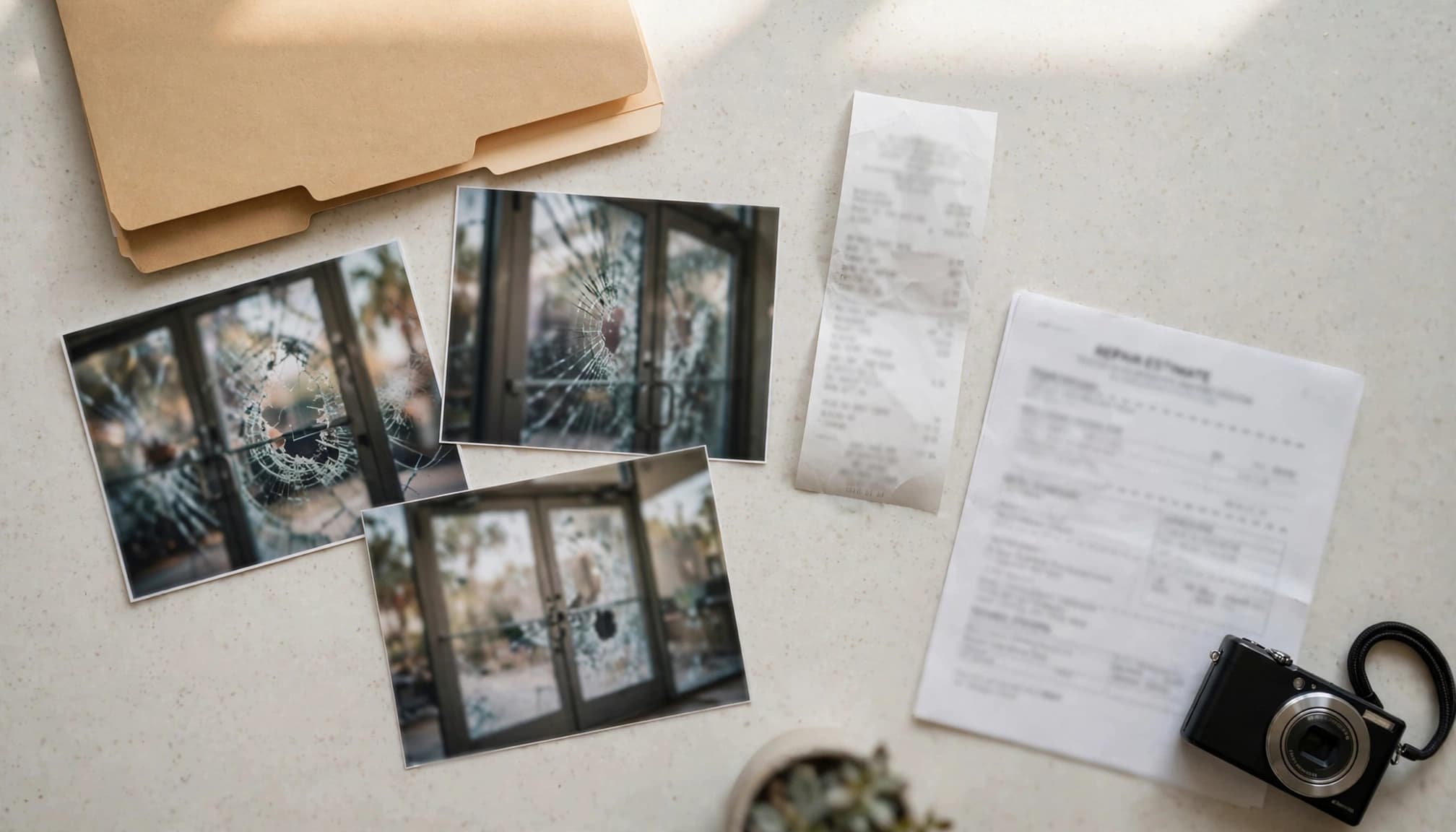
Use one folder for the property address and claim number. Within it, separate original photos, video, damage records, inventory, receipts, estimates, and communications.
A spreadsheet in Microsoft Excel or Google Sheets can track filenames, expenses, submission dates, and outstanding requests. Keep a backup outside the affected business premises, with access restricted to authorized people.
Save copies of everything submitted and any upload confirmation. When an estimate changes, retain the earlier version and identify the revision date.
Once repairs finish, photograph the completed storefront. Add final invoices, payment records, product information, permit records when applicable, and warranties. These documents close the repair record and support future maintenance.
Frequently Asked Questions
Should I wait for an adjuster before securing broken glass?
Protect people first and contact your insurer promptly. Ask what documentation it wants before temporary work. If unsafe conditions require immediate action, photograph what you safely can and retain records explaining the work. Never delay necessary safety measures solely to preserve a photograph.
Can photos determine whether I need glass or a full storefront replacement?
Photos help describe visible damage, but they can't confirm glass thickness, hidden corrosion, frame pressure, or the opening's condition. An on-site inspection can determine whether glass-only replacement is suitable. Ask for the findings in writing so the estimate explains why each component needs attention.
Does a contractor's estimate mean insurance will pay?
No. An estimate supports the proposed repair scope and cost; it doesn't confirm coverage. The insurer reviews the loss under your policy. Ask for written explanations of coverage decisions and any additional records it needs. Keep questions about repair specifications separate from questions about insurance benefits.
Move Forward With a Clear Repair Record
For your Cape Coral business, consistent documentation connects the damaged opening to the proposed repair and final expense. Preserve originals, describe conditions accurately, and keep insurer instructions in writing.
Caloosahatchee Glass & Mirror is a fourth-generation, family-owned company based in Fort Myers that serves Southwest Florida. You can request a commercial glass repair estimate to establish the repair scope while your insurer reviews the claim.
A complete record helps everyone work from the same facts without promising a coverage outcome.