
Storefront Glass Break-In: First Steps in Naples
Finding shattered glass at your business entrance can make you rush inside to check what's missing. After a storefront glass break-in, your first priority is keeping people safe , then preserving evidence and protecting the opening.
Broken glass, damaged locks, and a possible intruder make an immediate walk-through risky. For Naples business owners, recovery starts with a controlled response rather than a quick cleanup.
Start outside the damaged area and work through these steps before reopening.
Key Takeaways
- Keep employees and customers away from the damaged entrance, and don't enter if someone could still be inside.
- Contact law enforcement before disturbing the scene, then document damage once officers say it's safe.
- Notify your insurer and property manager, keeping photographs, receipts, and repair estimates together.
- Arrange temporary protection and a professional inspection before ordering replacement glass.
Handle a Storefront Glass Break-In Without Risking Injury
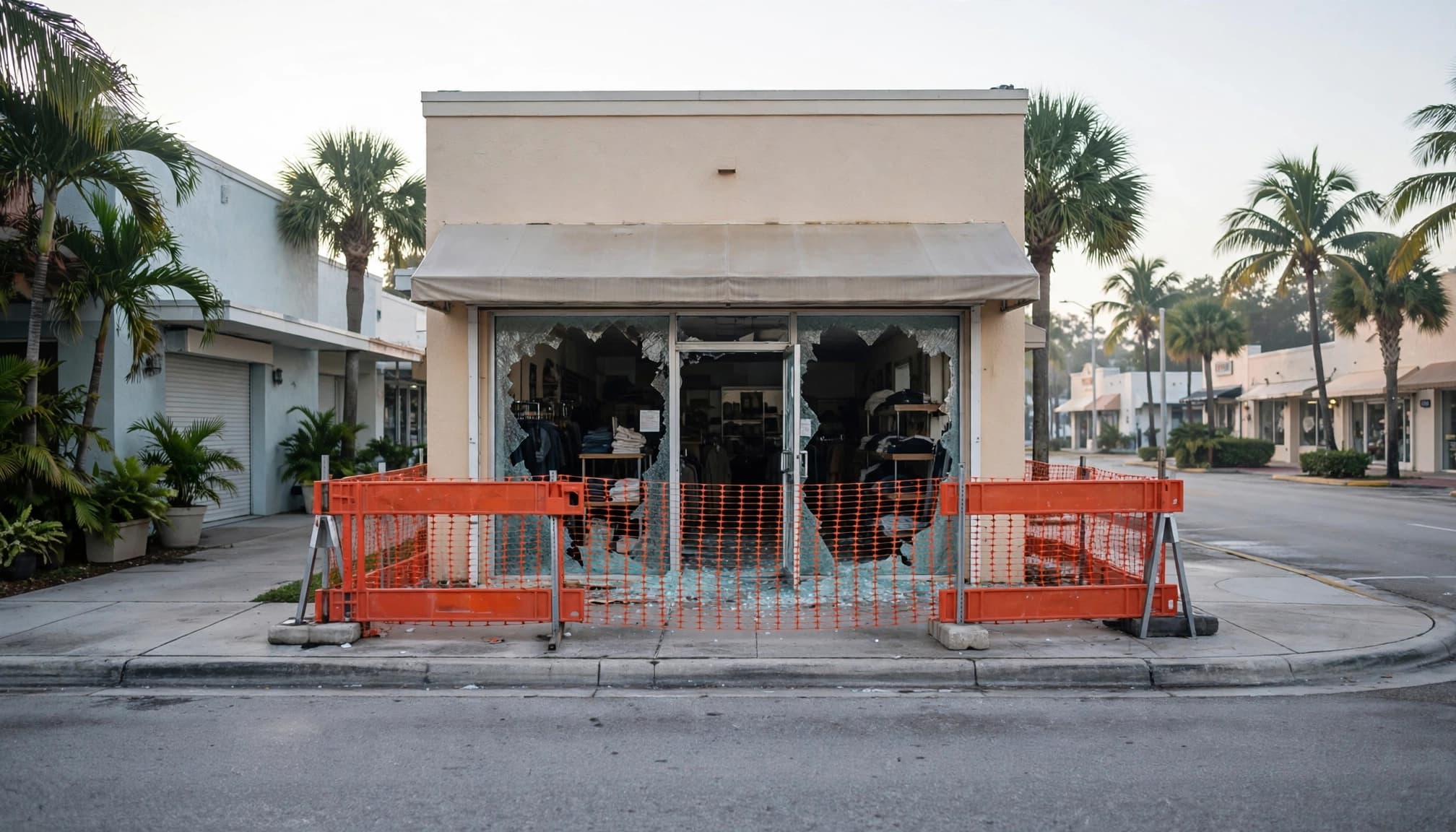
Stay outside until the scene is safe
If you see someone inside, hear movement, or find signs of an active break-in, move away. Call 911 for an immediate threat or injury. Don't confront anyone or follow a person leaving the property.
Even when the shop looks empty, avoid stepping through the broken opening. Hanging shards can fall without warning, while scattered fragments can extend beyond the doorway. A damaged door or frame may also shift when touched.
Tell arriving employees where to wait. Keep customers away until the scene has been assessed.
Separate people from the glass
From a safe distance, establish a clear boundary around the damaged entrance. Don't approach unstable glass just to position a cone or barrier.
For a storefront facing a shared sidewalk, notify the property manager so they can help redirect pedestrian traffic. Keep neighboring businesses informed if debris affects their entrances.
Also watch for water near electrical equipment, exposed wiring, or damaged ceiling materials. Leave those hazards to qualified responders rather than attempting a cleanup.
Contact the Correct Law Enforcement Agency
For a break-in that isn't an active emergency, contact the agency serving your business address. Naples Police Department serves locations within city limits; the Collier County Sheriff's Office handles unincorporated Collier County. A Naples mailing address alone doesn't establish jurisdiction.
Give the dispatcher your exact address, suite number, callback number, and what you observed. Mention injuries, a possible intruder, or an entrance that remains open.
When officers arrive, explain what you've touched or moved. Ask when you may begin documenting, securing, and cleaning the affected area.
Obtain the incident or report number and ask how to request the report when available. Keep that information with your claim records.
Before officers leave, tell them whether security cameras or neighboring businesses may have recorded the incident. Avoid posting footage publicly while you coordinate with investigators.
Document Damage Before Cleanup Changes the Scene
Photograph the opening and surrounding damage
Once law enforcement says it's safe, take wide photographs of the storefront and closer views of damaged components. Include the glass opening, frame, locks, hinges, and any affected merchandise.
Photograph both sides of the opening when you can do so safely. Bent framing, loose glazing stops, and water intrusion can matter just as much as the broken pane.
Don't remove dangling glass to improve a photograph. Instead, document what you can see from a safe position.
Keep original image files, then photograph the area again after temporary protection and permanent repairs.
Preserve footage and build a loss record
Save security footage promptly because recording systems may overwrite older files. Retain the original export and note whether the camera's displayed time matches the actual time.
Next, record missing or damaged items using purchase records, inventory reports, and serial numbers where available. Separate confirmed losses from items you're still checking.
Maintain a dated log of calls, site visits, and work performed. Include expenses for temporary protection and cleanup.
For a leased Naples storefront, send the property manager a factual summary. Ask who will authorize work on the storefront, frame, and door hardware.
Notify Your Insurer Before Assuming What's Covered
Explain the incident and ask about the next steps
Contact your business insurer or agent promptly. Provide the incident number, photographs, and an initial description of the damage.
Ask how to submit supporting records and whether an adjuster needs to inspect before permanent repairs. Also ask how the policy addresses damaged glass, stolen property, temporary protection, and business interruption.
Those items may fall under different policy provisions. Coverage depends on your policy , including its limits, deductible, exclusions, and applicable conditions.
If you lease the space, coordinate with the landlord. The lease and insurance arrangements may divide responsibility for the glass and storefront assembly.
Track protective work separately from upgrades
Ask the insurer how to document urgent work needed to protect the premises. If an opening creates an immediate safety or weather exposure problem, explain that clearly.
Keep estimates and paid invoices describing the work completed. A receipt that identifies temporary protection, debris removal, or glass replacement is more useful than a vague total.
If you choose better hardware or a different glass system, request separate pricing for those upgrades. Don't assume an improvement will receive the same claim treatment as restoring the damaged storefront.
Arrange Temporary Protection While Glass Is Ordered
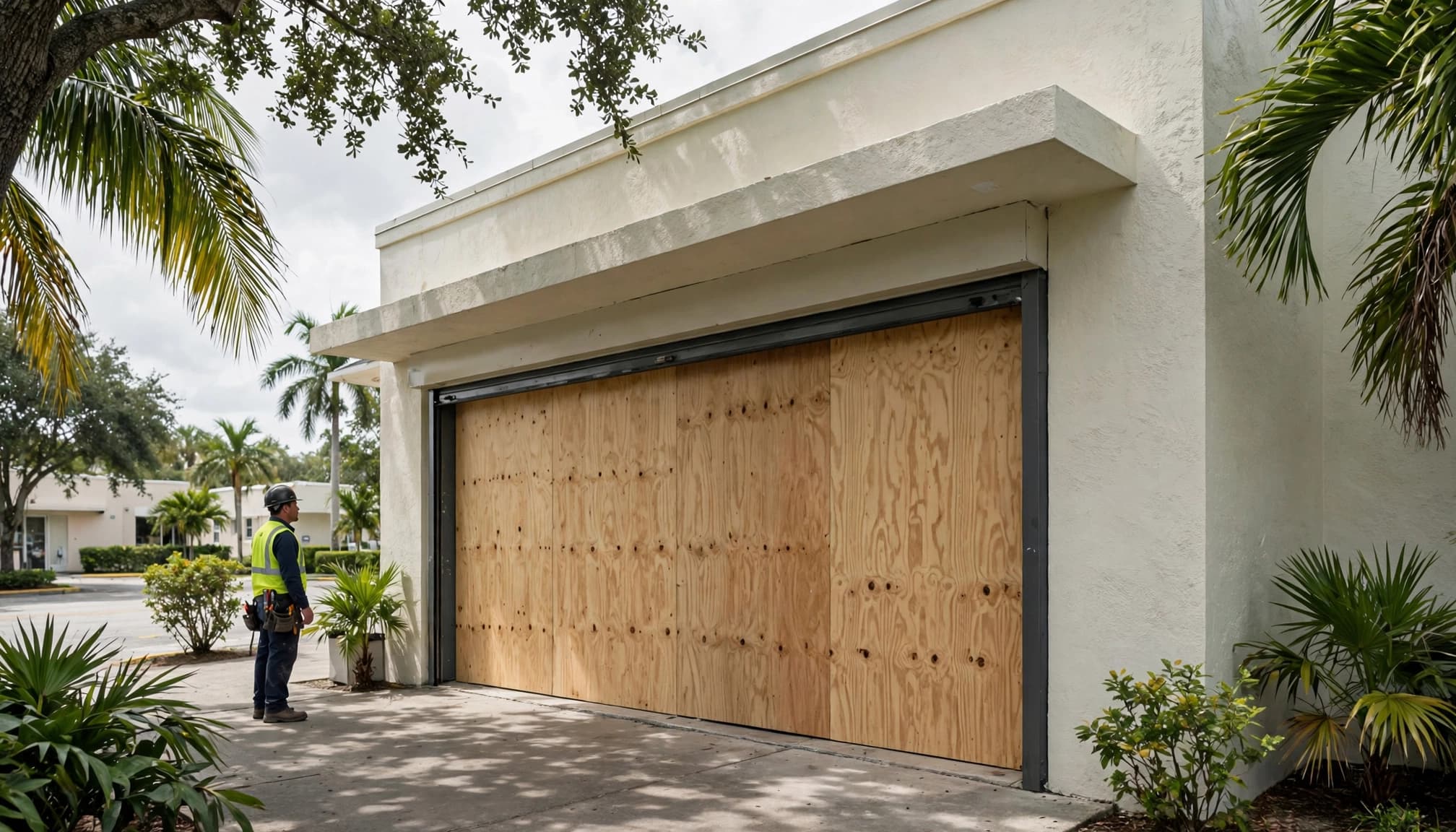
An exposed storefront leaves merchandise vulnerable to another entry attempt and Southwest Florida rain. After officers release the scene, contact a qualified contractor or glass professional about securing the opening.
Ask whether temporary protection is available, who will install it, and how it will attach. A damaged frame may need attention before a covering can be secured properly.
Plastic sheeting offers limited weather protection and doesn't provide a secure barrier. Avoid treating a makeshift covering as sufficient protection for an unattended business.
Temporary work should preserve usable exit routes and avoid creating new hazards. It also shouldn't be assumed to provide hurricane protection.
Caloosahatchee Glass & Mirror provides commercial glass repair and replacement, including storefront and entry-door glass. Confirm temporary-protection options and scheduling directly rather than assuming immediate availability.
The fourth-generation, family-owned company offers glass services for Naples businesses and free estimates. Its Fort Myers office can be reached at (239) 334-2690 during listed hours, Monday through Friday, 8:30 a.m. to 4:30 p.m.
Provide your address, photographs, the number of damaged openings, and a safe on-site contact. Ask for an itemized estimate and a realistic schedule.
Repair the Storefront System, Not Just the Visible Pane
Have the frame and hardware inspected
A storefront glass break-in can damage more than the glass. Force against the opening may bend aluminum framing, loosen glazing stops, or affect door alignment.
Glass-only replacement can be appropriate when the surrounding system remains sound. However, damaged framing, failed seals, or compromised hardware may require additional work.
Ask the glazier to inspect the frame, glass supports, seals, and door operation before finalizing the scope. Otherwise, a new pane could leave the original security or water-entry problem unresolved.
Caloosahatchee Glass & Mirror's storefront installation and replacement services cover individual panels and broader commercial storefront work.
Match the replacement glass to the opening
Replacement glass needs the correct dimensions, thickness, type, and compatibility with the existing system. For insulated units, pane makeup, coatings, spacers, and overall thickness also matter.
Tempered glass breaks into small fragments, while laminated glass uses an interlayer that can retain broken pieces. Neither description alone establishes burglary resistance or hurricane suitability.
Ask the professional to confirm the appropriate glass and applicable requirements for your opening. An impact-rated system depends on the complete assembly, including framing and installation.
Don't order solely from visible pane measurements. Tempered glass must receive its cutting and shaping before heat treatment, so accurate specifications matter before fabrication.
Reopen Only After Checking the Entire Entrance
Replacing the glass is one milestone. Before customers return, verify that cleanup, door operation, and security are also complete.
Have the contractor check alignment, seals, and any repaired hardware. Confirm that the door opens and closes normally, latches properly, and doesn't scrape or slam.
Then inspect the customer route for remaining debris. Keep affected merchandise out of circulation until you've assessed it for glass contamination.
Review alarm contacts, access codes, and camera views after repairs. If keys or access devices were stolen, discuss the appropriate response with your security provider or locksmith.
For hardware follow-up, review storefront glass door hardware options before selecting replacement closers, locks, or handles.
Finally, communicate revised hours to employees and customers. Keep public updates focused on access and reopening, without sharing security weaknesses or details that could interfere with the investigation.
Frequently Asked Questions
Should I save broken glass for the insurer?
Ask law enforcement and your insurer whether any material needs to remain available before disposal. Don't handle sharp fragments simply to preserve them.
Photographs may be useful, but they don't replace instructions from investigators or the claim handler. Tell the cleanup contractor if anyone has requested that damaged components be retained.
Can I send measurements to speed up replacement?
You can share existing plans, product information, and approximate dimensions if you already have them. Don't reach into a broken opening to measure.
The glazier should confirm final dimensions, clearances, glass specifications, and frame condition before ordering. Early photographs help with planning, but they aren't a substitute for field measurements.
Restore Safety Before Returning to Business
A broken entrance calls for a deliberate response: protect people, preserve evidence, and coordinate temporary protection with permanent repairs. Rushing inside or ordering glass before an inspection can create avoidable problems.
For Naples businesses, a safe reopening depends on the whole entrance, including its frame, hardware, and surrounding area.
Keep your incident records together and confirm the repair scope before authorizing work. The goal is a secure, usable storefront that lets employees and customers return with confidence.