
Why Commercial Glass Doors Slam Shut in Fort Myers
When a glass entry door slams, the cause may involve its closer, hinges, adjustment, or changing air pressure. The sound alone doesn't identify the failed part, but it does signal that the door may need attention.
In Fort Myers, commercial glass doors open and close throughout the business day, so small changes in hardware can quickly become noticeable. Knowing what to watch for can help you protect customers and staff while deciding when to call a qualified glass-door professional.
Why a Commercial Glass Door May Slam Shut
A door closer controls how quickly a door swings closed. If the closing speed changes, the door may slam even when the glass looks intact. Hinge or pivot wear, a shift in alignment, and changes in air movement can also affect the way it moves.
The closer may no longer control the swing
A closer that's worn, damaged, or out of adjustment may allow a door to move too quickly. Some closers control different parts of the swing, including the main closing motion and the final movement into the frame. If either part behaves differently than before, the door may close too hard or fail to latch smoothly.
The closer's visible condition can offer clues, but it can't confirm the cause. A leak, loose connection, or change in speed should be assessed as part of the entire door system.
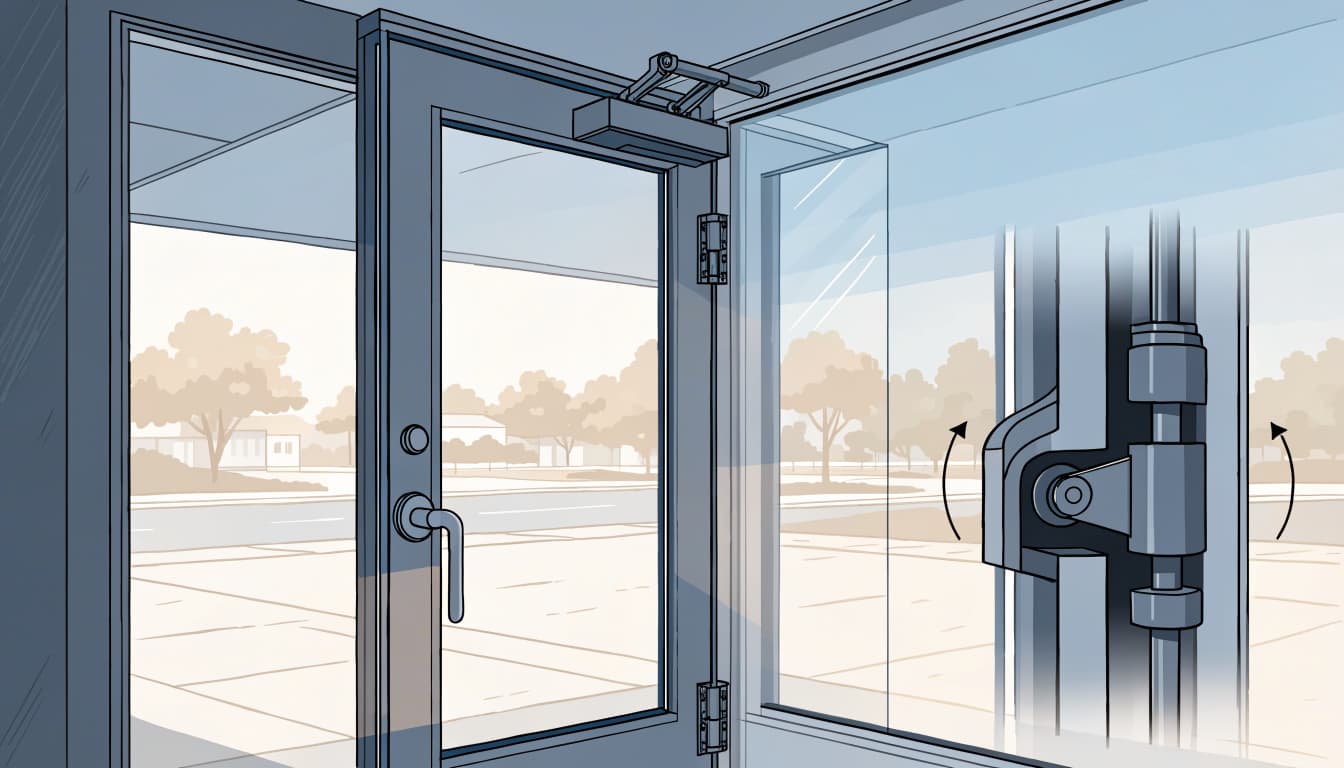
Hinges and pivots can affect alignment
Glass storefront doors may use pivots or other specialized hardware rather than ordinary residential hinges. Wear or looseness in these parts can change how the door hangs and moves. If the door rubs against the frame, sits unevenly, or has developed a gap, alignment may be involved.
Because several components work together, a slam shouldn't be treated as proof that one particular part has failed. A professional can assess the closer, hinges or pivots, frame, and door alignment as a system.
What the Door's Movement Can Tell You
Pay attention to how the door behaves, not only how loud it sounds. The timing and pattern of the change may help a professional narrow down what to inspect, though they don't provide a diagnosis on their own.
Note when the problem began
A sudden change after a period of normal operation may point to a change in the hardware, alignment, or conditions around the entrance. If the door has gradually become faster over time, wear or an adjustment issue may be involved. Either way, the symptom deserves attention when it creates a safety concern or interferes with normal use.
Notice whether the door slams every time or only under certain conditions. Also note whether it moves smoothly at first and then speeds up near the frame, or swings quickly throughout its travel.
Watch for other changes
A slam accompanied by scraping, rattling, a loose handle, or a lock that no longer lines up provides more information than the sound alone. These signs may involve different parts of the door assembly, so they're useful details to share when you request service.
Our article on storefront glass door hardware options covers the hardware that affects daily operation. Together, the closer, pivots, handle, and lock need to work with the door's fit.
Wind and Pressure Can Change Door Movement
Wind can push against a storefront door, especially at exposed entrances. Indoor pressure can also vary when air-conditioning systems, exhaust fans, or other doors change airflow through a building. These conditions may influence how a door moves, but they don't prove that weather or pressure is the only cause.
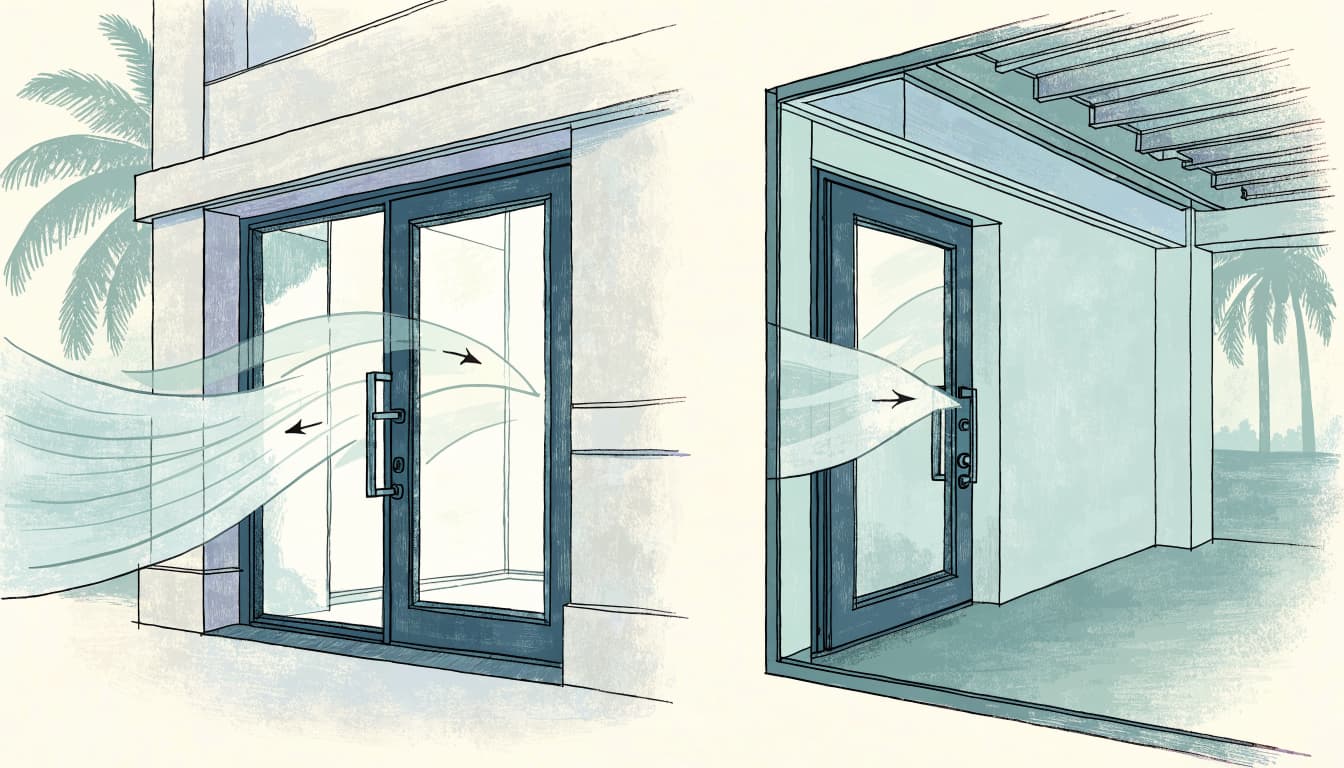
Look for a pattern, not a single event
If the door's behavior changes with gusts or when another entrance opens, airflow may be contributing. A door that slams consistently in calm conditions may have a different issue. In either case, the closer and door hardware still need to be evaluated.
Fort Myers businesses experience changing outdoor conditions, and indoor air systems can affect movement too. A brief record of when the slam happens can help distinguish a recurring pattern from an isolated incident.
Don't assume the weather is to blame
Wind may make a minor adjustment or hardware problem more noticeable, but it doesn't rule out wear or misalignment. Similarly, a door that behaves differently on a windy day may still need mechanical service. A professional can consider both the entrance conditions and the door itself.
Warning Signs That Deserve Attention
A loud slam can startle customers, but other changes may show that the door is becoming harder to use or less secure. Treat a new or worsening symptom seriously, especially at a busy entrance.
The door no longer closes or latches properly
If the door stops short of the frame, bounces back, or requires unusual force to latch, its movement needs assessment. A lock that sticks or no longer aligns may also indicate that the door's position or operation has changed.
In a retail store or restaurant, these problems can disrupt access throughout the day. Don't force the lock or push hard against the glass to make the door close.
Listen and look for physical changes
Scraping sounds, rattling hardware, visible gaps, or a handle that feels loose are useful warning signs. Cracks or chips in the door glass, a visibly shifted panel, or hardware that appears detached call for prompt professional attention.
If the door is striking the frame or moving unpredictably, keep people away from its swing path. When safe, use another entrance until a qualified professional can assess it.
Why Improper Adjustment Isn't a Safe DIY Fix
A closer adjustment can seem simple, but changing it without understanding the door may make its operation worse. The goal is controlled closing and reliable latching, not merely reducing the noise. The right adjustment depends on the closer and the way the door is installed.
Small changes can affect the whole closing cycle
A closer may have more than one adjustment, and changing one setting can alter how the door moves through its swing. Turning a screw too far or changing the wrong setting may cause the door to close too quickly, fail to latch, or behave inconsistently.
A visible screw or adjustment point doesn't necessarily identify the problem. If the closer is damaged or the door is misaligned, adjustment alone may not address the cause.
Avoid forcing a door that binds or shifts
Pushing, pulling, or propping a door that scrapes or feels unstable can put added stress on its hardware. Don't try to reposition a glass door or tighten components you can't safely access. A commercial glass-door professional can assess the mechanism and determine whether adjustment, repair, or replacement is appropriate.
When to Call a Qualified Glass-Door Professional
Arrange an assessment when a door repeatedly slams, closes at an inconsistent speed, fails to latch, or develops new noise or resistance. Call promptly if the glass is cracked, the door appears out of alignment, or a pivot or closer looks loose. These issues can affect both safe entry and the security of the business.
For an active safety concern, keep customers and staff clear of the door's path and use another entrance if possible. Don't wait for a slam to become a broken panel or a door that won't close.
Caloosahatchee Glass & Mirror provides commercial glass installation, repair, and replacement for businesses in Fort Myers and across Southwest Florida. Our commercial storefront glass repair includes work on storefronts and door glass. We also offer commercial glass repair and replacement for damaged business glass.
What to Share When Requesting an Assessment
A few clear observations can help describe the problem. Note when the slamming started, whether it occurs with every closing, and whether wind or other building activity seems to affect it. Mention any scraping, rattling, lock trouble, or visible changes in alignment.
Avoid testing the door repeatedly if it's striking the frame or moving unpredictably. A photo of visible damage may help communicate what you're seeing, but don't handle loose hardware or put yourself in the door's path.
Businesses in Cape Coral, Bonita Springs, Estero, Naples, Lehigh Acres, and Punta Gorda may also encounter changing entrance conditions. Wherever the business is located, the door's symptoms are useful clues, not a substitute for an inspection.
Key Takeaways
- A door closer, hinge or pivot wear, improper adjustment, wind, and indoor pressure changes may contribute to slamming.
- The sound alone can't identify which component is at fault.
- Scraping, loose hardware, poor latching, or damaged glass make a professional assessment more urgent.
- Keep people clear of a door that moves unpredictably, and don't attempt adjustments if you're unsure how the hardware works.
Frequently Asked Questions
Can wind make a commercial glass door slam?
Yes, wind may affect how a door moves, particularly at an exposed entrance. Indoor air pressure can also influence its swing. A weather-related pattern doesn't rule out a hardware or alignment issue.
Does a slamming door always mean the closer is broken?
No. The closer is one possible cause, but hinges or pivots, adjustment, alignment, and air movement may also contribute. An inspection can help determine what needs attention.
Should I keep using a door that slams?
If the door is unpredictable, strikes the frame, won't latch, or has visible damage, keep people away from its path and use another entrance if possible. Contact a qualified glass-door professional for an assessment.
Keep a Slamming Door From Becoming a Bigger Problem
A slamming glass door is a warning sign, not a diagnosis. The closer, pivots, alignment, and conditions around the entrance can all affect its movement, so the safest next step is to note the symptoms and have the system assessed when the problem persists.