
How to Protect Shower Glass During a Bathroom Remodel
To protect shower glass during a bathroom remodel, control access, prevent contact with tools, and assign responsibility for its protection. A glass professional should assess an existing enclosure if the work could affect its supports, dimensions, or hardware.
Even a cosmetic update can expose glass to grit, moving equipment, and accidental impacts. Protecting the whole enclosure means accounting for hinges, seals, and exposed edges alongside the glass faces.
Start by deciding whether the enclosure can remain undisturbed or needs professional removal.
Key Takeaways
- Assign responsibility for glass protection, access, removal of coverings, and final cleaning in the remodeling scope.
- Keep construction materials away from the enclosure, and never use its glass or hardware to support equipment.
- Have damaged or shifting glass inspected, and clean finished panels with nonabrasive products and soft cloths.
These precautions apply whether you're keeping an existing enclosure or planning new custom glass. The amount of work around the shower determines how closely the remodeling contractor and glass installer need to coordinate.
Assess the Existing Enclosure Before Work Begins
Record more than the glass faces
Photograph the enclosure from inside and outside. Include the hinges, handle, corners, mounting clips, bottom sweep, and wall connections. These views help the installer understand the system and identify worn components.
Also record existing scratches, cloudy areas, damaged seals, and changes in door movement. Clear photographs give everyone a shared reference if a concern appears during construction.
Don't assume a panel is sound because its center looks clear. Tempered glass edges deserve particular attention because chips or hard impacts can lead to breakage. Leave close inspection of concealed edges to a glass professional.
Decide whether keeping it installed makes sense
A vanity replacement creates different risks than rebuilding the shower walls. If work affects the curb, wall connections, or structural backing, the enclosure needs professional assessment.
For a Cape Coral bathroom receiving new tile, thicker finishes may change the opening enough to prevent reuse. Undamaged glass alone doesn't establish that the existing enclosure will fit.
Professional removal also requires a handling and storage plan. Heavy tempered panels can suffer damage if they twist or strike another hard surface.
Coordinate Your Fort Myers Remodeling Team
Assign responsibility across trades
Make glass protection part of the written scope. Name the person responsible for the enclosure's condition, access arrangements, protection removal, and final cleaning. This prevents tasks from falling between the remodeling contractor and individual trades.
The plan should also explain who can operate the shower door and who must respond if protection shifts or glass damage appears.
Homeowners managing a Bonita Springs remodel remotely benefit from progress photographs that include the enclosure. Photos provide useful documentation, although they don't replace an inspection when a panel moves or hardware loosens.
Keep hardware and mounting points off-limits
Painters, plumbers, and tile installers should understand which fittings support the glass. Nobody should loosen a clip, remove a channel seal, or adjust a hinge simply to gain working room.
Our explanation of shower glass panel mounting options shows how channels and clips form part of the support system. They aren't decorative pieces that workers can move independently.
If construction exposes weak backing, damaged tile, or moisture deterioration around an attachment point, address that condition with the appropriate professionals. Covering the glass won't correct an unstable mounting surface.
Keep Impacts and Abrasion Away From the Glass
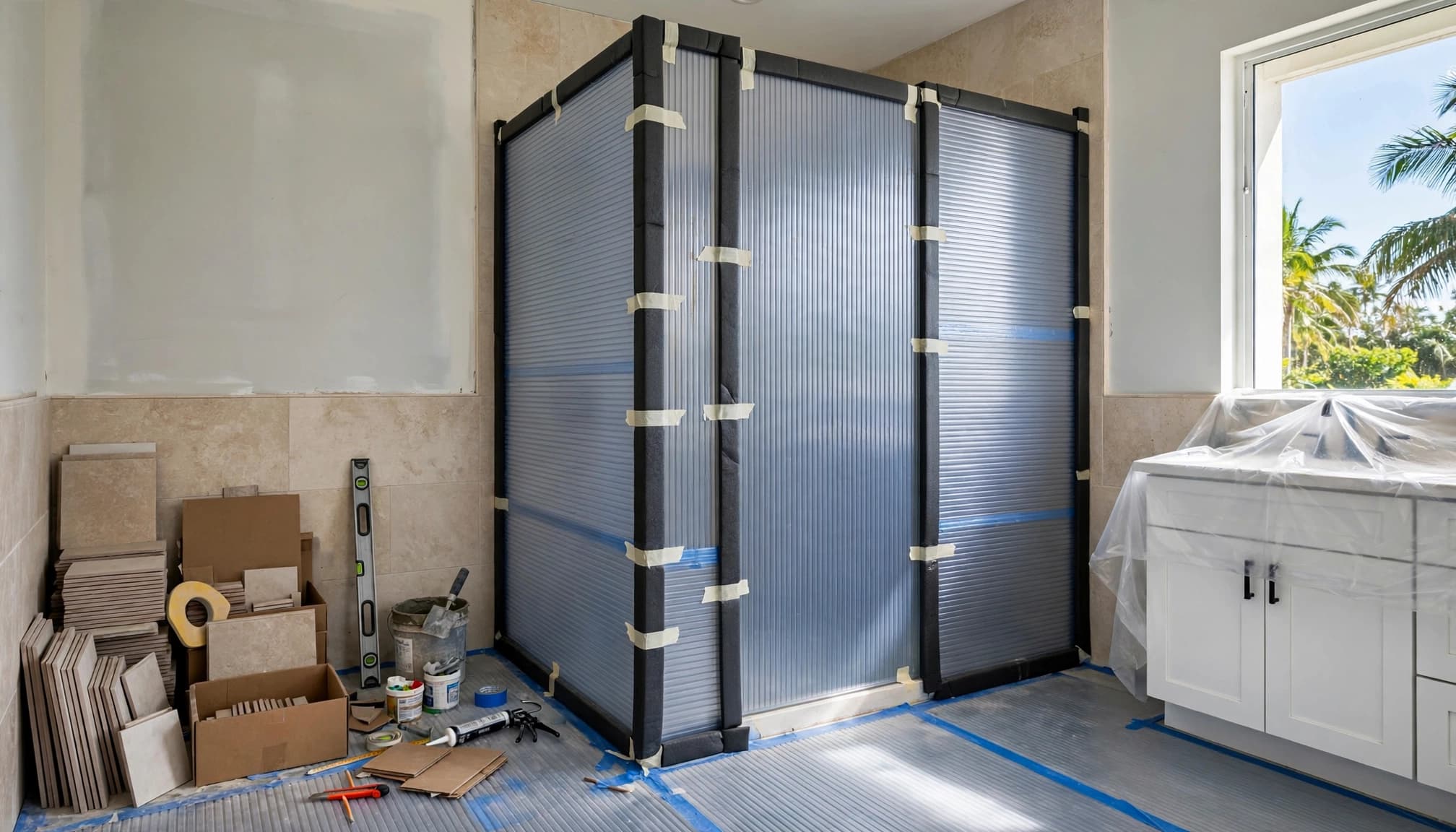
Separate the enclosure from construction traffic
Keep the route for carrying materials separate from the shower wherever the layout allows. Long trim pieces, ladders, and tools can strike a door or exposed corner as workers turn.
Don't stack tile, place toolboxes, or rest a countertop against the enclosure. Handles and hinges shouldn't carry bags, cords, or equipment.
In a compact Lehigh Acres bathroom, limited floor space makes this separation harder. Designate another location for supplies instead of allowing the shower to become convenient storage.
A covering doesn't turn shower glass into a safe surface for leaning construction materials.
Treat covering as one part of the protection plan
Temporary covering can help separate the enclosure from surrounding work, but its presence shouldn't create false confidence. A covered panel still needs protection from pressure, movement, and hard contact.
The contractor's covering plan should account for the glass faces, exposed corners, hardware, door movement, and adjacent finishes. Responsibility for keeping that protection secure must remain clear throughout the project.
Avoid improvising around a loose or poorly aligned door. If it starts rubbing, rattling, or contacting tile, stop operating it and arrange professional inspection. Additional covering cannot solve a mechanical problem.
Preserve the Fit When the Shower Changes
Protecting a panel's surface won't preserve its usefulness if the remodeled opening no longer matches it. New tile, backer board, waterproofing, or a different curb can change the dimensions and mounting conditions.
A Naples remodel that changes the shower footprint also needs a fresh review of door swing and fixture clearance. The existing door must clear the vanity, toilet, and other nearby surfaces.
Tempered glass cannot be cut or drilled after heat treatment. Existing holes for handles, hinges, and clips therefore limit how a panel can be reused. Workers cannot safely trim an old panel to accommodate a smaller opening.
For a changed layout, new custom fabrication may provide the correct fit. Measurements should reflect the completed tile, stone, and threshold surfaces rather than rough construction dimensions.
Our guidance on planning a custom shower glass order covers hardware locations, seals, and water direction. Resolving those details helps prevent a finished enclosure from binding or allowing avoidable splash outside the shower.
Clean Shower Glass Without Scratching It
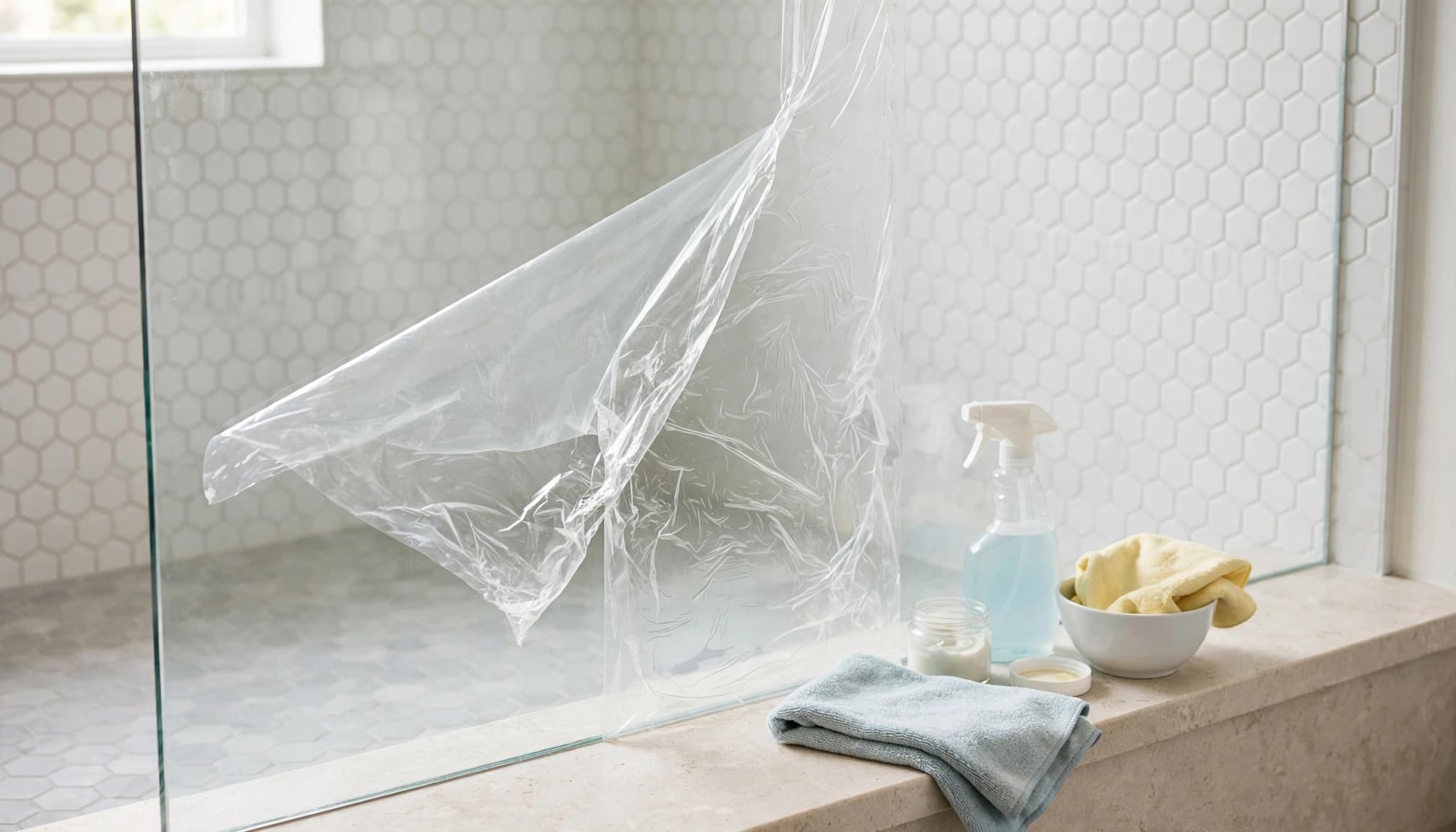
Keep abrasive tools out of the cleanup
Construction residue needs careful handling. Don't drag a dry cloth over visible grit or try to scrape stubborn deposits away with a razor blade. Abrasive pads, powdered cleansers, and steel wool can damage glass or surrounding finishes.
Use a nonabrasive cleaner suitable for the glass surface and a clean, soft cloth. Protective coatings and metal finishes also affect which cleaning products are appropriate.
Our shower glass safety and care guide recommends gentle cleaning and avoiding blades or harsh scouring tools. Stubborn construction residue deserves professional attention rather than increasingly aggressive scrubbing.
Include seals and hardware in the cleaning scope
Cleanliness matters around the bottom sweep, handle, hinges, and tracks as well as across the panels. These areas can retain residue that a quick wipe misses.
After everyday shower use, remove water with a squeegee or microfiber cloth. For Estero homeowners dealing with recurring spots, understanding how hard water affects shower glass helps distinguish mineral buildup from construction residue.
HydroShield® glass protection helps repel water, soap scum, and mineral deposits. It can make routine care easier, but it doesn't replace cleaning or protect glass against construction impacts.
Inspect the Complete Enclosure at the Walkthrough
The final walkthrough should cover more than whether the panels look clean. Compare the enclosure with the original photographs and identify any new scratches, chipped corners, damaged seals, or finish changes.
Have a glass professional assess changes in alignment or operation. A door should move smoothly without rubbing, binding, or striking nearby fixtures. Fixed panels shouldn't rattle or shift.
For a Punta Gorda renovation that includes shower-wall repairs, pay particular attention to the hardware connections and surrounding surfaces. The enclosure depends on sound backing and secure mounting.
The inspection should also address even gaps, bottom-sweep condition, and water containment. A clean panel can still have a worn seal or an alignment problem.
Don't force a sticking door or tighten unfamiliar fittings yourself. Those symptoms need an assessment of the whole system, especially when construction has changed the walls or threshold.
Frequently Asked Questions
Can shower glass be reused after a bathroom remodel?
Yes, when the panels remain undamaged, the finished opening stays compatible, and the hardware remains reliable. A professional inspection should guide that decision.
Changes to tile thickness, the curb, wall alignment, or door position can prevent reuse even when the glass looks good. New panels may be necessary because tempered glass can't accept different holes or revised dimensions after manufacturing. Reuse should never depend on forcing a panel into place.
Does a protective glass treatment replace construction protection?
No. Water-repellent treatments address routine cleaning concerns such as soap residue and mineral deposits. They don't prevent edge damage, eliminate the risk of breakage, or make glass suitable for supporting materials.
A treated enclosure still needs controlled access and separation from tools and construction traffic. Its hardware also needs protection from accidental adjustment. Discuss existing surface treatments as part of the cleaning plan so cleanup doesn't damage a finish that makes everyday maintenance easier.
Protect the Enclosure as a Complete System
Glass protection works best when everyone respects the enclosure's edges, mounting points, and moving parts. Clear responsibilities and careful handling reduce avoidable damage during a remodel.
Preserving an existing enclosure also depends on fit and condition . A panel that no longer suits the opening needs a different solution, even if its surface remains clear.
We provide custom shower enclosures and repairs throughout Southwest Florida. If your project affects the glass or its supports, arrange a professional assessment as part of your remodeling plan.