
Medicine Cabinets vs Vanity Mirrors for Bathrooms
Choosing between medicine cabinets vs vanity mirrors can change how much a bathroom holds, how open it feels, and how well the wall works around the sink. A medicine cabinet adds concealed storage at eye level, while a vanity mirror gives you a clean reflective surface with more freedom in size and shape.
Southwest Florida homeowners also need to consider humidity, salt air, ventilation, and the condition of the wall behind the vanity. The right choice depends on your storage habits, bathroom layout, and the look you want to maintain for years.
What Each Option Provides
A medicine cabinet combines a mirror with shelving behind the door. Recessed models sit inside the wall, while surface-mounted versions attach directly to the finished wall. Both can hold everyday items such as toothbrushes, skincare products, shaving supplies, and small grooming tools.
That storage can make a noticeable difference in a compact guest bathroom or a busy primary bath. Items stay off the counter, and frequently used products remain easy to reach. Adjustable shelves also help you organize containers of different heights.
A vanity mirror is a separate reflective panel installed above the sink or vanity. It doesn't add storage inside the wall, but it gives you greater design flexibility. You can choose a wide rectangular mirror, a rounded shape, a frameless edge, or a custom size that fits between sconces.
A broad mirror can also make a narrow bathroom feel larger by reflecting light and extending the visual width of the room. It works well when the vanity already has enough drawers and cabinets for daily necessities.
Medication storage deserves separate consideration. Bathrooms often experience heat and moisture, so check the storage directions for each product before keeping medicine near a shower. A cabinet can organize supplies, but it shouldn't replace proper storage conditions.
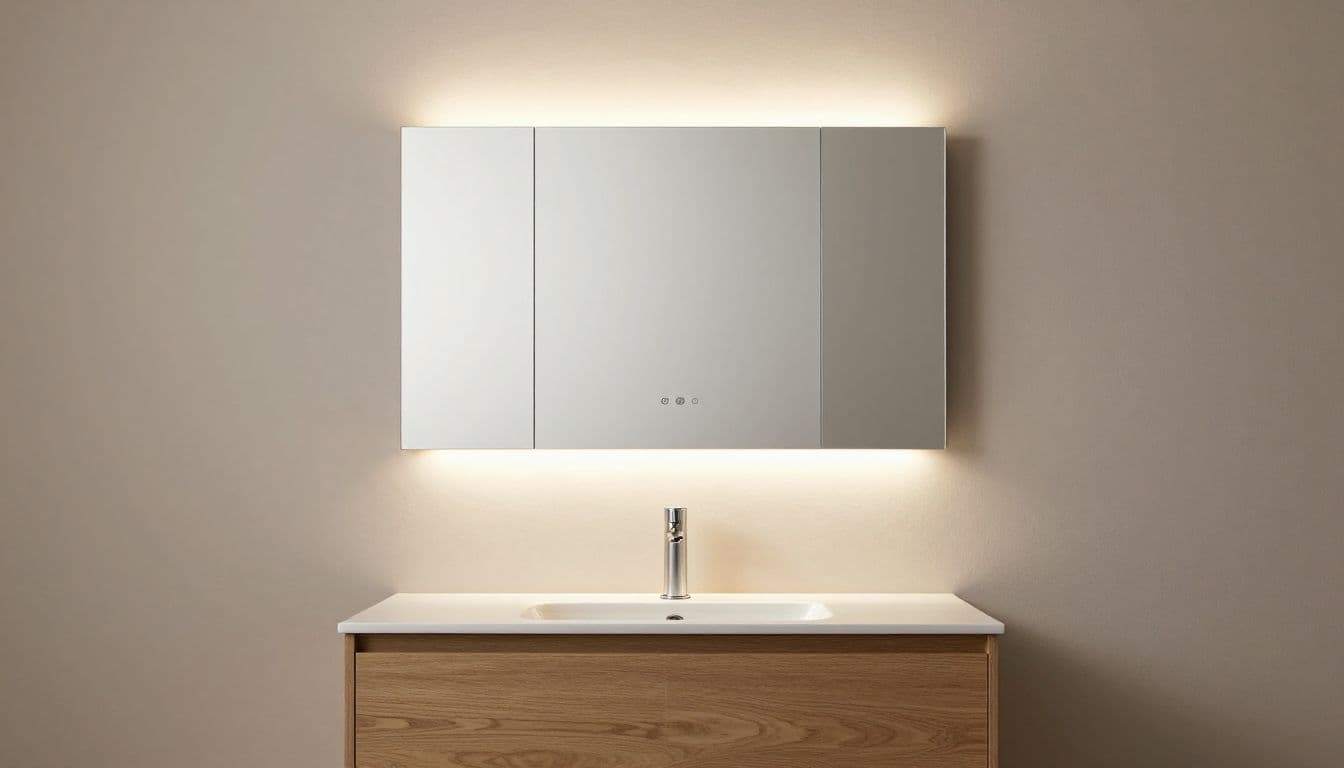
How medicine cabinets vs vanity mirrors compare
The practical medicine cabinets vs vanity mirrors decision becomes easier when you compare the features that affect daily use.
| Consideration | Medicine cabinet | Vanity mirror |
|---|---|---|
| Storage | Shelves hide small bathroom items | Relies on vanity drawers and cabinets |
| Wall depth | Recessed models need a suitable wall cavity | Needs little wall depth |
| Appearance | Functional and often more traditional | Flexible, open, and easy to customize |
| Installation | Requires careful planning around plumbing and wiring | Requires secure mounting and accurate placement |
| Maintenance | Includes hinges, shelves, and door hardware | Mainly requires glass cleaning |
| Best fit | Bathrooms that need accessible storage | Bathrooms with enough cabinet storage |
A recessed cabinet gives you the cleanest storage profile, but wall conditions matter. A contractor needs to check for studs, electrical wiring, plumbing, insulation, and other obstructions before cutting into the wall. Surface-mounted cabinets simplify that work, although they project farther into the room.
Vanity mirrors usually offer a simpler visual arrangement. They can span the full width of a single-sink vanity or stop neatly between wall lights. Custom fabrication also helps when a standard mirror leaves awkward gaps around a backsplash, window, outlet, or sloped ceiling.
Choose a medicine cabinet when storage comes first
A medicine cabinet is a strong choice when your counter fills with products every morning. It keeps small items close without forcing you to open a lower drawer or bend toward a vanity cabinet.
Recessed installation is especially useful in a narrow bathroom. The cabinet sits within the wall cavity, so it preserves more walking space than a deep surface-mounted unit. A mirrored door can still provide the full reflection you need while hiding the shelves.
This option also suits homeowners who want a tidy appearance without adding decorative containers or countertop organizers. In a shared bathroom, separate shelves can give each person a defined storage area.
Before choosing one, confirm the cabinet's dimensions and door swing. A large door may interfere with a wall sconce, adjacent cabinet, or shower entry when the vanity sits in a tight corner.
Choose a vanity mirror when design flexibility matters
A vanity mirror works better when your bathroom already has enough storage or when you want the mirror to shape the room's style. It allows you to select the height, width, corners, edge finish, and position without accommodating a built-in box.
This flexibility helps in custom renovations. A mirror can follow the width of a floating vanity, fit beneath a soffit, or extend across two sinks. You can also coordinate its proportions with a shower enclosure, glass shelving, or other reflective surfaces.
A large frameless mirror creates a bright, continuous look. A framed mirror adds a stronger furniture-like detail. In either case, the mirror should match the vanity width and leave enough room for faucets, lighting, and cabinet doors.
Account for humidity and salt air in Southwest Florida
Moisture changes the storage decision in coastal homes. Bathrooms in Fort Myers, Naples, and nearby communities can face high humidity, frequent condensation, and salt carried through the air. Those conditions can affect cabinet materials, metal hardware, adhesives, and mirror backing.
A medicine cabinet needs a moisture-resistant cabinet box and hardware that can tolerate bathroom conditions. Hinges should open smoothly, and shelf supports should stay stable after repeated exposure to humidity. Avoid placing the cabinet where shower spray hits the door or wall joints directly.
Mirror quality matters as well. Moisture can reach the backing through unprotected edges, poor mounting points, or gaps around the perimeter. Over time, that exposure may contribute to darkened edges or damage behind the reflective surface. A properly sized mirror with protected backing and finished edges is a safer long-term choice.
Ventilation helps both options. Run the exhaust fan during showers and for a while afterward, especially in a bathroom with limited windows. Wipe standing moisture from the backsplash and vanity top instead of allowing water to collect along the bottom edge of the mirror or cabinet.
Coastal bathrooms need more than an attractive front surface. The backing, edges, hardware, and wall connection all affect how the installation handles moisture.
A property near the Gulf may need extra attention to exposed metal. Ask about corrosion-resistant hardware and suitable mounting materials, particularly for a rental or second home that may sit unused for periods of time. Good installation also keeps the mirror or cabinet secure when the wall surface includes tile, stone, or uneven texture.
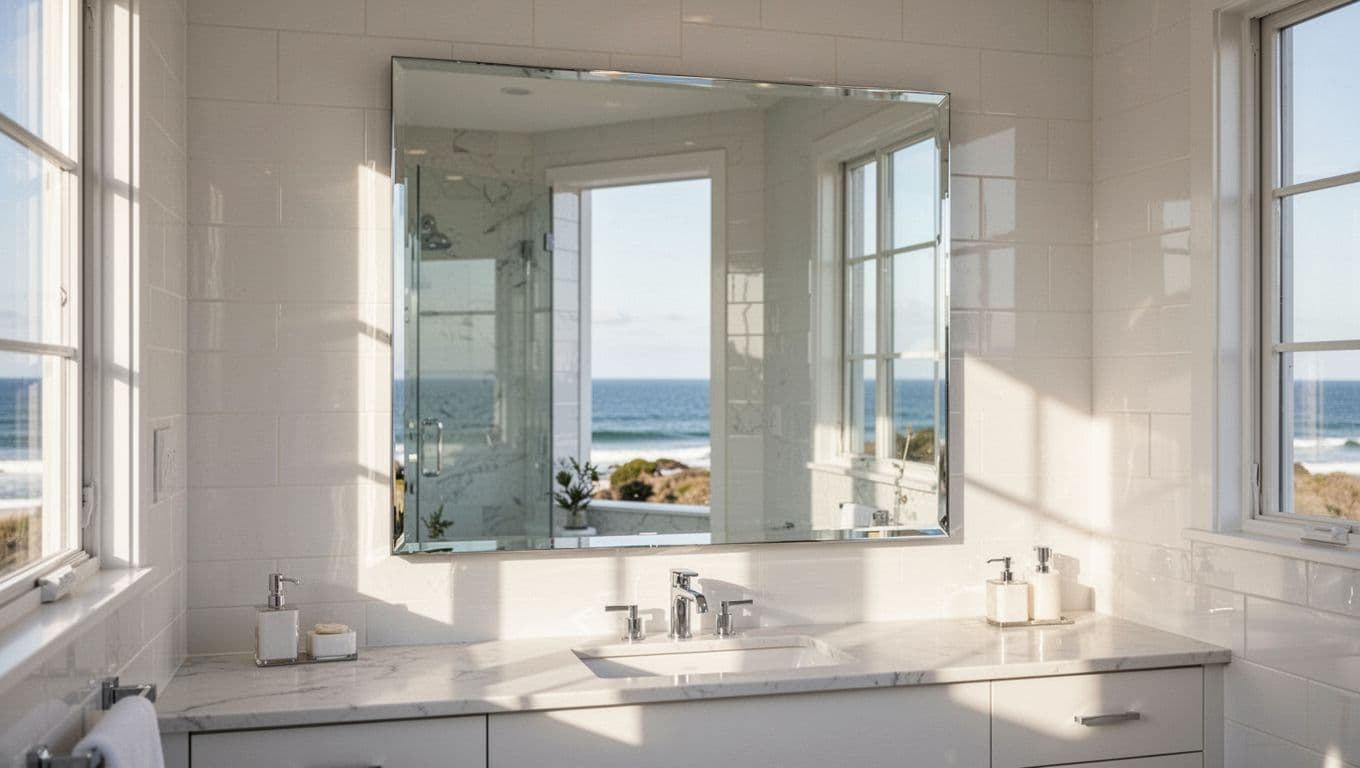
Measure before you choose storage
A medicine cabinet and a vanity mirror both need accurate planning, but they create different installation concerns. Start by measuring the vanity width, backsplash height, ceiling height, and the distance to nearby walls or doors.
Mark the location of faucets, sconces, outlets, and medicine cabinet doors. If you want a recessed cabinet, have the wall checked before ordering. A cabinet that fits the visible wall may not fit between studs or around plumbing.
Mirror height also affects comfort. In many bathrooms, the bottom of the mirror sits about 4 to 6 inches above the backsplash. The top edge often falls around 70 to 76 inches above the finished floor, but household height, lighting, and mirror dimensions can change that position. Use this proper mirror placement above your vanity as a starting point rather than a fixed rule.
Double vanities require another choice. One wide mirror creates a unified look, while two separate mirrors can align more naturally with individual sinks and sconces. Two medicine cabinets provide more storage, but their widths and spacing need to work with the wall lights and plumbing.
A paper or cardboard template can help you test the size before installation. Stand at the sink, open nearby doors, and check whether the proposed mirror or cabinet feels balanced from across the room.
Use this decision checklist
Walk through these questions before selecting a product:
- Do toiletries regularly cover the countertop? If they do, a medicine cabinet can provide useful eye-level storage.
- Does the vanity already include wide drawers or several shelves? If so, a custom vanity mirror may give you the cleaner result.
- Is the wall deep enough for a recessed cabinet? Check studs, plumbing, wiring, and insulation before assuming the answer is yes.
- Does the bathroom feel narrow or dim? A larger mirror can reflect more light and make the room feel less confined.
- Will a cabinet door hit a light fixture, wall, or shower opening? Test the swing before installation.
- Do you want a custom shape or a mirror that spans two sinks? A vanity mirror usually offers more design freedom.
- Is the home close to the coast or used as a rental? Give extra attention to sealed edges, ventilation, and corrosion-resistant hardware.
- Do you need storage for items that shouldn't remain in a humid bathroom? Keep product instructions in mind before using any bathroom cabinet for medicine.
Some bathrooms benefit from both approaches. A recessed medicine cabinet can handle daily necessities, while a separate decorative mirror on an adjacent wall can provide a larger reflection. In a double-sink layout, homeowners may also pair two storage cabinets with a continuous mirror if the wall and proportions allow it.
The strongest choice is the one that fits your actual routine. A stylish mirror won't solve a storage shortage, and a large cabinet can make a carefully designed bathroom feel crowded.
Conclusion
The choice between medicine cabinets vs vanity mirrors comes down to what your bathroom needs most. Choose a medicine cabinet when concealed, easy-to-reach storage matters. Choose a vanity mirror when the room already has enough storage and you want more control over size, shape, and visual openness.
For Southwest Florida homes, also judge the materials and installation details. Humidity and salt air make protected mirror backing, sound mounting, suitable hardware, and good ventilation important parts of the decision. When the storage plan and wall measurements work together, your bathroom can stay organized without sacrificing the clean look you want.