
Ordering Round Window Glass in Punta Gorda
Ordering round window glass starts with the frame, the glass construction, and accurate measurements of the glazing pocket. The visible circle alone doesn't give you the finished size, and thicker glass won't automatically fit better or provide storm protection.
For a Punta Gorda home, sun exposure, wind-driven rain, and the condition of an older frame also affect the choice. Before approving a custom order, separate the dimensions you can gather safely from the fabrication measurements that determine the finished pane.
Key Takeaways Before You Order
- Measure across several directions, because an older round frame may no longer form a perfect circle.
- A full-size template must identify whether it represents the opening or the finished glass.
- Match the glass construction and thickness to the existing glazing system.
- Include frame condition, access, sealing components, and installation work in the project scope.
Start With the Frame and Existing Glass
Decide whether the frame can stay
Glass-only replacement can work when the frame remains stable and can support the correct replacement. However, new glass won't repair rotted wood, substantial aluminum corrosion, distorted vinyl, or recurring water entry around the assembly.
A round window may be fixed, but its retaining components still matter. Glazing beads or stops hold the pane in place, while seals and supports help it sit correctly.
Our guide to glass-only window replacement explains the difference between a damaged pane and a window that needs broader work.
Identify a single pane or sealed unit
A single-glazed window contains one pane. An insulated glass unit, often called an IGU, contains multiple panes sealed around a spacer.
Moisture trapped between panes usually points to a failed insulated-glass seal. In that situation, replacement generally involves the sealed unit rather than one sheet.
Photograph any manufacturer label, etched marking, tint, or spacer information from a safe position. Those details help identify the original construction before the replacement specification takes shape.
Measure the Opening Without Guessing the Glass Size
Record several diameters
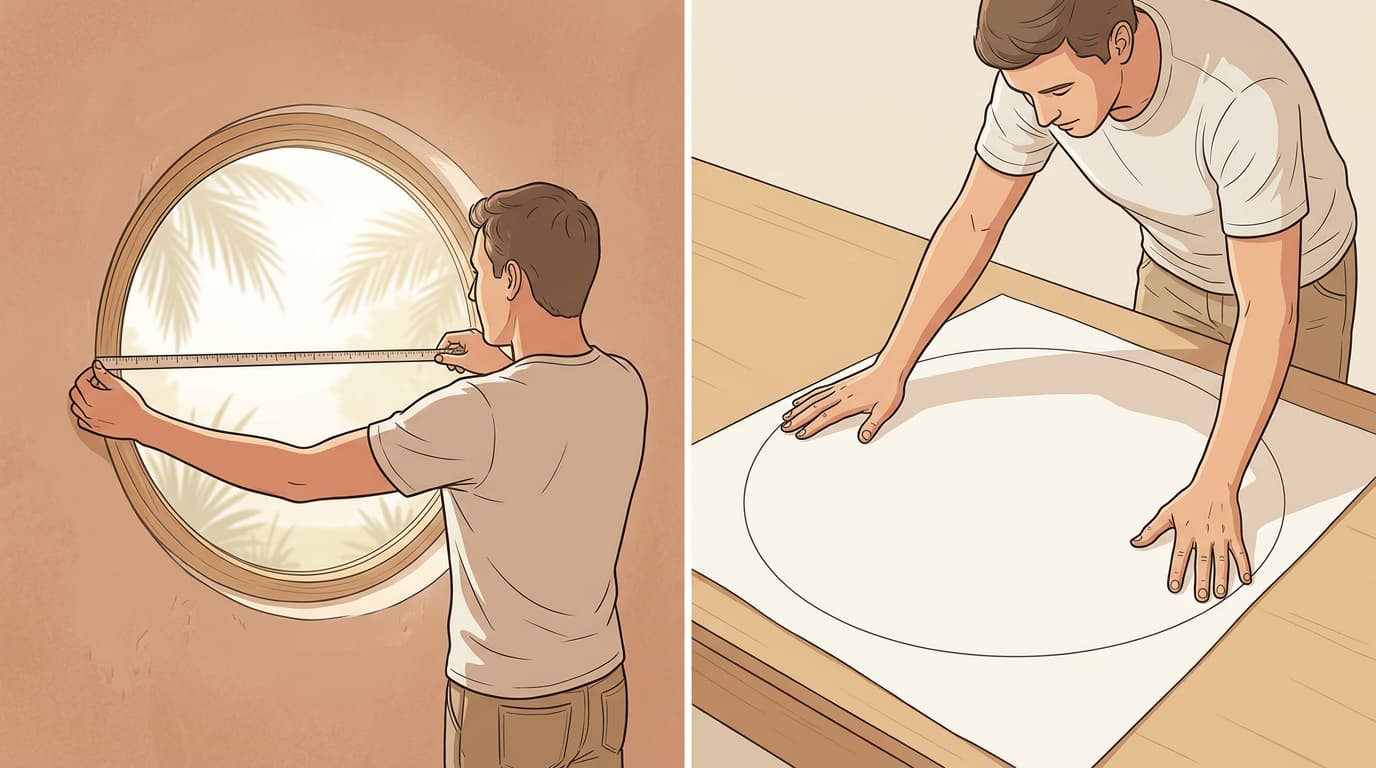
For an initial estimate, measure the accessible opening horizontally and vertically through its center. Then record diagonal measurements across the same opening. Keep the tape straight, and use the same reference surfaces each time.
Different readings can reveal an out-of-round frame or show that the measuring points changed. Record each reading as measured rather than averaging them into one diameter.
Include a straight-on photograph showing the entire window. A close-up alone can hide whether the circle sits in a rectangular surround or forms part of a larger assembly.
Separate visible dimensions from fabrication dimensions
The visible glass, the frame's glazing pocket, and the rough opening in the wall are different measurements. Trim can also conceal part of the assembly.
The glass edge usually extends behind the visible retaining components. Therefore, measuring only the exposed circle doesn't establish the replacement diameter.
A measurement can be accurate and still describe the wrong part of the window. Label exactly what you measured.
Don't subtract an arbitrary allowance for clearance. The installer determines the finished size from the glazing system, support requirements, and necessary edge clearances. Leave stops, cracked glass, and inaccessible exterior components in place for professional assessment.
Provide a Template That Defines the Correct Outline
A full-size template can help communicate an unusual shape, particularly when an older circular opening has slight irregularities. However, a tracing of decorative trim isn't automatically a usable glass pattern.
The template needs to represent the intended fabrication boundary. When the glazing pocket must be exposed to establish that boundary, the installer should handle the removal and pattern work.
Use material that stays flat and holds its shape, such as suitable paperboard or rigid template stock. Mark the intended top, the room-facing side, and the project identification. Also state whether the outline describes the opening or the finished glass size.
Keep written dimensions with the pattern. A photograph of a template can provide context, but perspective and image scaling make it unsuitable as a full-size substitute.
Avoid folding or stretching the pattern during transport. For round window glass, small outline changes can affect the fit around the entire perimeter. The final drawing and template should describe the same shape before fabrication begins.
Choose Round Window Glass for the Existing System
Glass type determines more than appearance
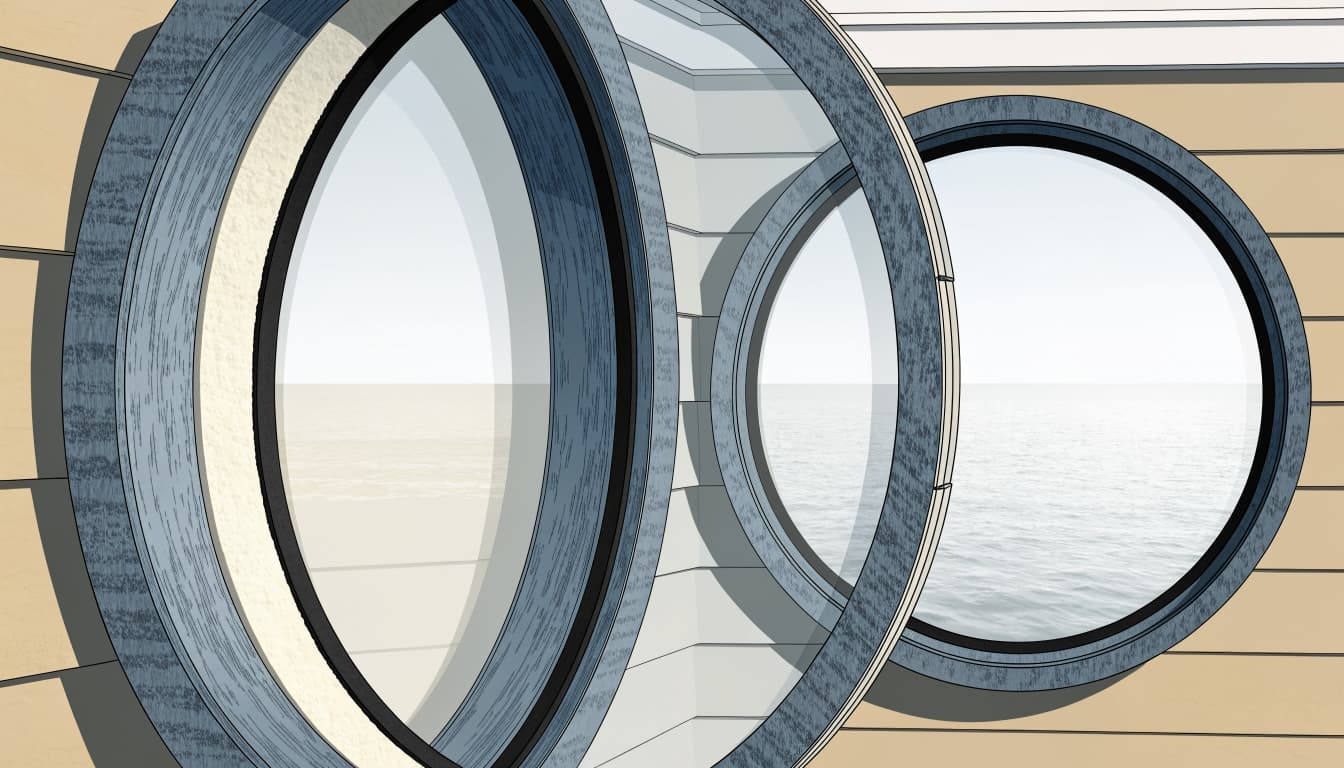
Tempered glass breaks into small fragments rather than the sharp pieces associated with ordinary annealed glass. Laminated glass contains an interlayer that helps retain fragments after breakage. Insulated construction addresses a different issue: multiple panes and the space between them.
These categories can overlap. For example, an insulated unit can incorporate safety glass.
Our comparison of tempered and laminated window glass explains their different behavior.
Tempered glass alone doesn't establish impact protection. An impact-rated window depends on the complete tested configuration, including the glass, frame, attachments, dimensions, and installation. A replacement needs to preserve the intended system rather than substitute a pane based only on appearance.
Thickness must suit the glazing pocket
There isn't one thickness that suits every circular window. Pane size, glass construction, support, frame capacity, and the original system all affect the specification.
For an IGU, the overall unit thickness matters as well as the individual glass layers. A thicker replacement may not accept the existing stops or gaskets.
Tempered glass also can't be cut or resized after tempering. The final shape and dimensions must be settled before that processing step.
Match the edge preparation to the concealed installation. A decorative polished edge, appropriate for some exposed custom glass, isn't automatically the right specification for a pane held inside a window frame.
Account for Punta Gorda Exposure and Installation
Match sunlight, tint, and privacy needs
A west-facing round window can receive strong afternoon sun, while a shaded opening may have different needs. Note the direction, nearby shade, and whether glare or heat is part of the reason for replacement.
Existing tint and Low-E coatings also affect the match. A new pane can differ in color or reflection even when its shape fits perfectly. Privacy glass introduces another visual choice, especially in a bathroom.
Our guidance on matching replacement glass to existing windows covers these selection factors.
Include seals, drainage, and access
For a Punta Gorda property exposed to salt air or wind-driven rain, corrosion and drainage deserve attention alongside the glass.
The installer needs compatible supports, seals, and retaining components. Adding sealant over drainage openings can interfere with the frame's intended water management.
Access also changes the work. A high round window above a foyer or stairwell may require equipment that a ground-level opening doesn't. Include exterior landscaping, interior furniture, and nearby roof surfaces in the initial photos so the installation scope reflects the actual location.
Prepare a Complete Custom Order
A useful order describes the finished assembly and the work required to install it. Diameter alone leaves too much undecided.
Keep the following information together:
- Provide overall photographs, close-ups of the frame, and readable images of existing labels or markings.
- Identify whether the order covers a single pane, a sealed insulated unit, or a larger window assembly.
- Include the final dimensions, any required template, glass construction, thickness, tint, and coating details.
- State which retaining components, seals, removal work, disposal, and surrounding repairs belong in the installation scope.
Our article on custom glass measurements and specifications covers the broader planning details.
Compare estimates on that same basis. A glass-only supply price and an installed replacement price cover different work. Likewise, an estimate that includes frame repairs can't be compared fairly with one limited to replacing the pane.
Measurement, fabrication, and installation are separate stages. Specialty shapes, glass construction, and component availability affect scheduling, as explained in our guide to factors affecting glass replacement time.
Before installation, move furniture and decorations away from the work area where practical. Keep children and pets away from damaged glass, and leave loose fragments untouched. An upper-story opening or unstable pane needs professional handling rather than a homeowner attempting a closer measurement.
Frequently Asked Questions
Can an existing round pane serve as the template?
An intact pane removed safely by a professional can help establish the original shape. However, its dimensions still need to suit the frame. A broken pane is unsafe to handle and may not preserve enough of the edge to define an accurate pattern.
Does a small round window always need safety glass?
Size and shape alone don't determine safety-glass requirements. Location and intended use matter, including proximity to doors, bathing areas, and walking surfaces. The replacement specification needs to account for the opening's application.
Can a fogged round window be repaired by replacing one layer?
When moisture sits between the panes of a sealed IGU, the usual replacement is the complete insulated unit. The existing frame may remain if it's sound and compatible. Surface condensation is a different condition and doesn't, by itself, establish a failed sealed unit.
Order the Pane as Part of a Complete Window
The right round window glass fits the frame's actual glazing system and preserves the opening's intended performance. Accurate measurements, a clearly defined template, and compatible installation components all support that result.
For your Punta Gorda project, begin with safe photographs and the existing window information. Let the final order follow the whole-window assessment , especially when corrosion, leaks, or damaged retaining parts accompany the glass problem.
Call us at (239) 334-2690 for a free estimate.