
Where to Place Glass Door Visibility Markers
Place glass door visibility markers across the clear parts of the door where people can see them as they approach. Continue the pattern onto nearby fixed glass when someone could mistake that glass for an opening.
The goal is to make the glass surface easy to recognize from both sides, without blocking the view through the entrance. The best layout depends on the door, surrounding panels, lighting, and traffic.
Start by looking at the whole entrance, not just the door handle.
Where to Position Glass Door Visibility Markers
A useful marker catches a person's attention before they reach the glass. Horizontal bands, rows of dots, and other repeated shapes can make the surface visible while leaving much of the view open.
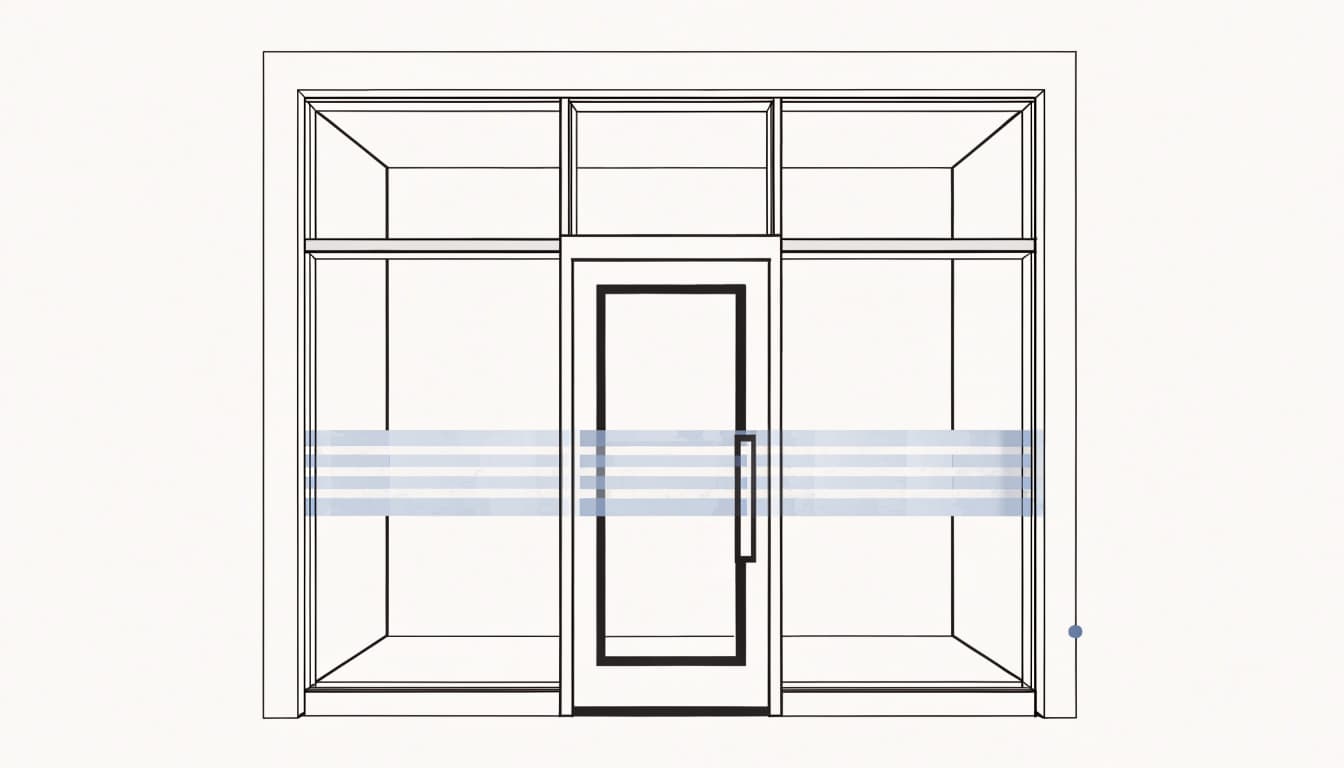
Place markers across the main field of glass
Position the pattern through the central area people see as they walk toward the entrance. A marker tucked into a corner or placed only near the bottom of the pane can be missed when someone's attention is directed ahead.
Consider people of different heights, including children and wheelchair users. A pattern at more than one viewing level can make the door easier to notice across a wider range of approaches.
Leave enough clear glass to see someone approaching from the other side. That sightline matters in a busy Fort Myers storefront where customers may enter while others are leaving.
Extend the pattern across nearby fixed panels
Mark fixed glass beside the door when it lies along a walking route or looks like part of the entrance. A sidelight can be nearly invisible when its frame blends into the door frame.
Carry a consistent pattern across the door and neighboring panels so people can recognize the full glass wall. The door's handle, frame, and opening direction should remain easy to identify.
Visibility Markers for Common Entrance Layouts
A marker layout should follow the way people move through the space. A single glass door has different trouble spots than a wide storefront with multiple panels.
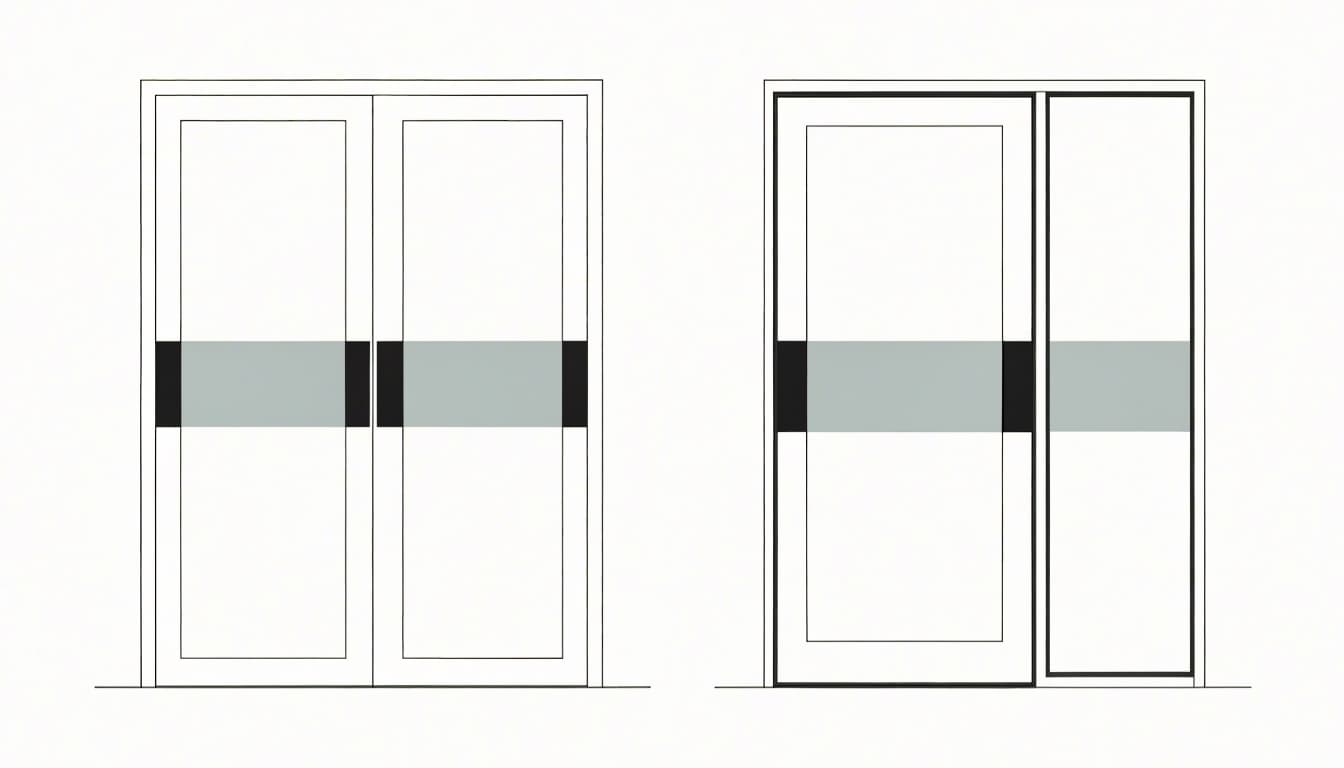
Single doors and sidelights
For a single door with glass on either side, place markers on the door and on any adjacent pane someone could approach directly. Keeping the bands or repeated shapes aligned helps make the whole assembly visible.
At a Cape Coral office, for example, a visitor may approach at an angle rather than straight on. The sidelight nearest that path deserves attention even if the door itself has a prominent handle.
Keep the handle area clear enough that the entrance remains recognizable. A marker should reveal the glass without making a fixed panel look like a second door.
Double doors and wider storefronts
On double doors, use a consistent pattern across both leaves. Misaligned or mismatched markers can make one leaf harder to see, particularly when a door is held open.
For a wider entrance, extend the visual treatment to fixed glass near the main path. Pay attention to panels that meet at corners or sit opposite an interior corridor, where a person might continue walking toward what appears to be open space.
If the building has sliding glass doors, look at the panels in both their open and closed positions. The pattern needs to remain understandable as the panels move and overlap.
Make the Markers Visible From Both Sides
A marker that stands out outdoors may fade into the background when viewed from inside. Glass reflects light and also reveals whatever is beyond it, so the same pattern can look different depending on the direction of travel.
Compare the pattern against real backgrounds
Look through the entrance toward the surfaces a visitor will see behind the marker. A white frosted design may disappear against a pale wall, while a dark design can be hard to distinguish against a shaded lobby.
Choose a treatment with clear contrast against the backgrounds on both sides. A pattern that combines light and dark areas may be easier to recognize where those backgrounds vary. The surrounding frame can help define the opening, but it shouldn't be the only visible cue on a large clear pane.
Consider sunlight, glare, and indoor lighting
Southwest Florida sunlight can make reflections stronger at certain times of day. At a Bonita Springs business, a door that looks obvious from a shaded walkway may appear almost transparent when viewed toward a bright interior.
Look at the entrance in daylight and under the lighting used after dark. View it straight on and from the angles people actually use. If reflections obscure the marker, adjust the pattern or its contrast before settling on a final design.
Space Markers So the Glass Reads as a Surface
Spacing matters as much as the design itself. A few isolated shapes can look decorative without making the full width of the glass easy to recognize.
Use a repeated pattern
A continuous band or a regularly spaced row of dots gives the eye a more consistent cue than a single small decal. Across a wide panel, repeat the elements so there aren't long clear stretches along the path of travel.
The individual shapes should be distinct enough to see against the surroundings. If they blend together with the view behind the glass, a larger or more contrasting pattern may work better than adding more tiny details.
Keep the layout consistent
Align the pattern across neighboring panels where practical, including the glass above or beside the door's main traffic area. A consistent visual line helps people understand where the glazed wall continues.
Leave open areas where people need to see through the entry. At an Estero office, that can mean balancing a visible marker with a clear view between the reception area and the hallway. The pattern should help people notice the surface while preserving useful sightlines.
Choose a Pattern That Fits the Entrance
Visibility markers don't have to look like warning signs. Frosted bands, stripes, dots, and simple geometric designs can work with a storefront or office interior when the shapes stand out against their surroundings.
Balance visibility and privacy
A broader frosted area can provide more visual privacy than a narrow pattern, but it also reduces the view through the glass. That tradeoff matters around doors where people need to see approaching traffic.
In a Naples conference room, for example, a patterned band may offer some screening while leaving clear areas for visibility. The amount of privacy depends on the treated area, viewing angle, and light on each side. Our comparison of frosted and etched office glass covers those differences in more detail.
Use branding with care
A company logo can be part of a marker design, but a small logo alone may leave too much clear glass around it. Repeating a simple shape or combining branding with a visible band can make the treatment more useful.
For an existing glass door in good condition, applied film can offer flexibility if a tenant changes its design later. Etched or patterned glass may suit a new installation where the appearance is intended to last. Neither option replaces the need for suitable glass in the opening.
Keep Handles and Door Movement Clear
Markers should make a door easier to recognize without obscuring the parts people need to use. Keep handles, locks, push plates, and the edges of the door visually distinct from the surrounding pattern.
A busy design around the pull handle can make it harder to find. Likewise, treating a fixed panel and the door identically without any visible hardware cue can leave visitors unsure where to enter. Our guide to storefront glass door hardware explains the options for commercial entrances.
Watch how the door moves through its full swing. The marker shouldn't interfere with gaskets or hardware, and the pattern should remain visible when the door is partly open.
For interior glass doors in Lehigh Acres offices, also consider furniture and signs near the entrance. A display placed in front of a marked panel can hide the cue from someone approaching at an angle.
Visibility Markers and Safety Glass Do Different Jobs
Markers help people notice a glass surface. Safety glazing addresses how suitable glass performs when subjected to impact or breakage. A film, frosted pattern, or decal doesn't turn ordinary glass into safety glass.
Florida's building code identifies glass doors and certain nearby panels as hazardous locations where safety-glazing requirements can apply. The applicable details depend on the opening and its conditions.
Tempered and laminated glass are common safety-glazing options, although the product must suit the installation. Tempered glass also can't be cut or drilled after tempering, so a new door's openings and hardware need to be planned before fabrication.
A visibility project may reveal glass that is chipped, cracked, or otherwise damaged. In that case, address the panel itself rather than covering the damage with a marker. We provide commercial glass repair and replacement for entry doors, storefronts, and interior glass.
Maintain Visibility After Installation
A well-placed marker can become harder to see if it peels, collects residue, or gets covered by temporary signs. Include the entrance in routine property walks, especially where doors get heavy daily use.
Clean the treatment gently
Use a soft cloth and a cleaner suitable for the selected film or glass finish. Abrasive pads and aggressive scraping can damage a film's surface or lift its edges.
Share the cleaning instructions with anyone responsible for the property. Around a Punta Gorda storefront, salt residue, fingerprints, and frequent wiping can all affect the appearance of the entrance over time.
Reassess when the space changes
Look at the markers again after moving displays, changing lighting, or replacing an adjacent panel. A new interior wall or dark window covering can change the background enough to reduce contrast.
If a door pane is replaced, plan for a matching visibility treatment on the new glass. The surrounding pattern should remain consistent, and the replacement glass should suit the door assembly.
Make the Entrance Easy to Recognize
The most effective placement marks the door and nearby glass where people approach, with a pattern visible from both sides. Good contrast and consistent spacing help visitors recognize the surface before they reach it.
At Caloosahatchee Glass & Mirror, we provide commercial storefront glass services for businesses planning new or replacement glass. Contact us for a free estimate if your entrance needs glass work.