
Custom Mirror Cost Factors in Southwest Florida
Custom mirror cost depends on the size and design of the glass, along with the work needed to deliver and install it. A straightforward vanity mirror usually involves fewer fabrication steps than a wall-sized mirror with decorative edges and openings for fixtures.
The most useful budget starts with the complete project , not the glass alone. Here's how your choices and the conditions in your home or business affect an estimate.
How Mirror Dimensions Affect Your Quote
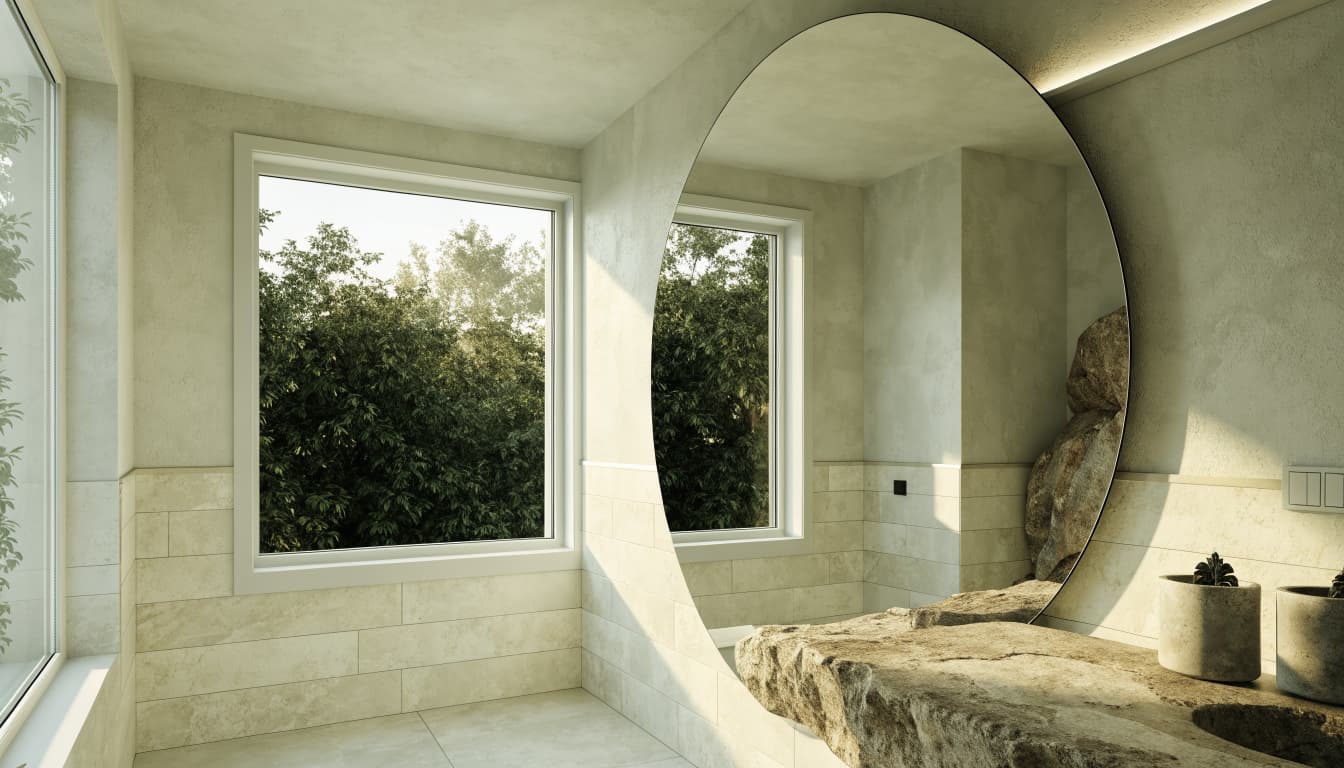
Size affects material needs, but it also changes how a mirror must be handled and installed. A large panel may require more planning than a smaller piece, even when both have the same finish.
Width and Height
A mirror that spans an entire double vanity uses more glass than one centered above a single sink. Larger pieces are also heavier and can be more difficult to move through doors or around finished cabinetry.
For a preliminary estimate, provide the approximate width and height of the space you want to cover. Include the desired outside dimensions of the mirror, rather than the vanity width alone. The finished measurements must also account for nearby walls, backsplash, lights, and cabinets.
One Panel or Several
A single mirror creates a continuous reflection, while multiple panels introduce seams. Panel count also affects the amount of cutting, edge finishing, and alignment involved.
For a home gym in Cape Coral, for example, the layout should account for the available wall and the route into the room. One large panel isn't automatically less expensive than several smaller ones. Access, dimensions, and installation all affect the comparison.
Glass Type and Thickness Change the Specification
Mirror glass comes in different thicknesses and finishes. Those choices affect the material and can also change the way the piece needs to be supported.
Choosing a Suitable Thickness
A 1/4-inch mirror is common for custom bathroom vanities, particularly for large or frameless designs. Its stiffness helps limit flexing during handling and installation.
Thinner 1/8-inch glass may suit a small decorative mirror with a supportive frame. A 3/16-inch option falls between the two where available. The right choice depends on the mirror's dimensions and how it's mounted, as our guide to bathroom mirror glass thickness explains.
Thicker glass can add weight and affect handling or support. Choosing the thinnest option solely to reduce cost may not suit the finished design.
Standard and Decorative Glass
A conventional clear mirror gives you a familiar reflection. Tinted, antique, or other specialty finishes create a different appearance and can change the material cost.
For an Estero dressing room, consider how much of the mirror you need for a clear view before choosing a decorative finish. If the finish is important to the design, include it in the initial request so the estimate reflects the intended material.
Edgework and Shape Add Fabrication Steps
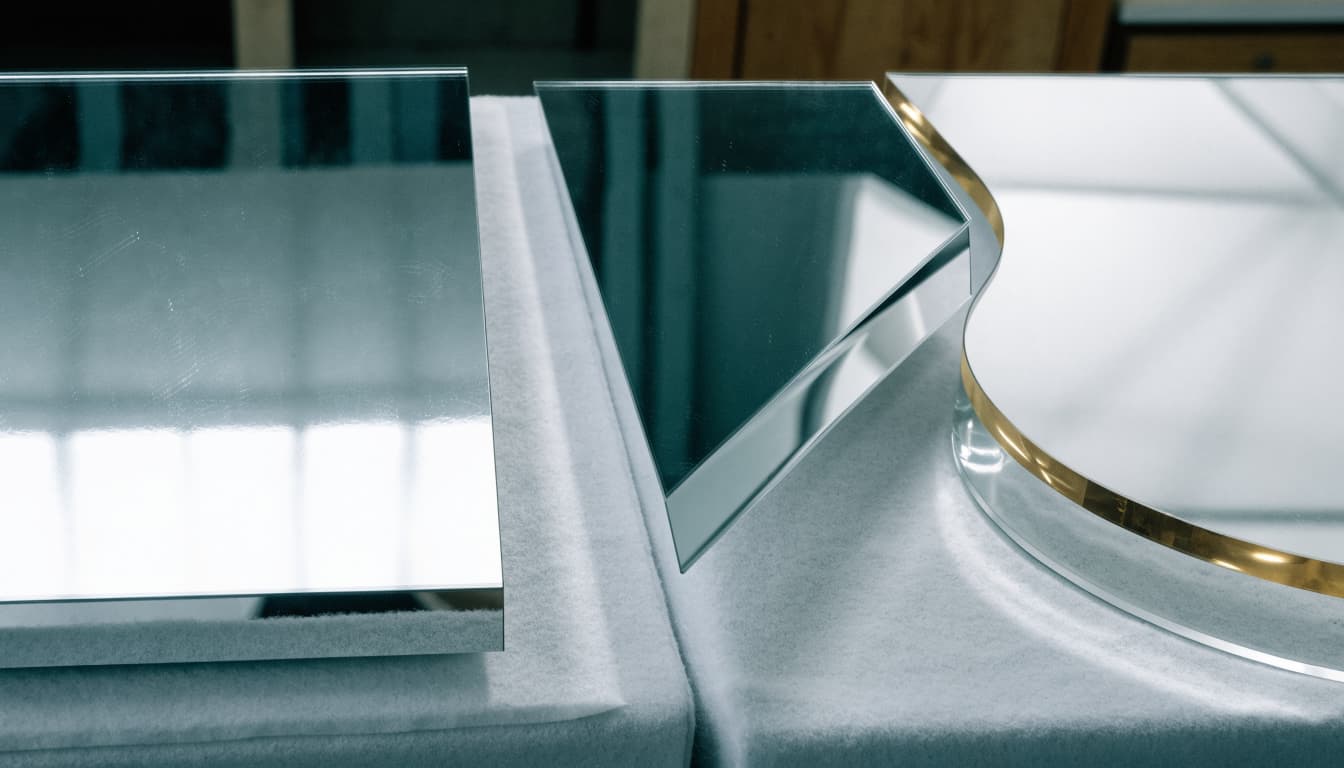
The outline and edge give a mirror much of its finished appearance. They also determine how much work the glass needs after cutting.
Polished and Beveled Edges
A flat-polished edge has a smooth, clean finish. A beveled edge has an angled strip around the perimeter that catches light and adds a decorative border.
For mirrors of the same size and shape, a polished edge often costs less because beveling requires additional finishing. The difference isn't a fixed rule for the entire project, though. Our comparison of polished and beveled mirror edges shows how each finish looks and where it fits.
If you plan to frame the mirror, keep in mind that a frame may cover part of a decorative edge.
Rectangles, Curves, and Corners
A rectangular mirror is often a straightforward design to fabricate. Rounded corners, arches, circles, and irregular outlines require different cutting and finishing work.
For a Bonita Springs entryway, a curved mirror may be worth the added design detail. If keeping the project simple matters more, a rectangle with polished edges is a useful starting point for the estimate. Share the intended shape early because width and height alone don't describe the work.
Cutouts and Obstacles Affect Fabrication
A mirror that fits around existing fixtures needs more than an outside measurement. Outlets, sconces, wall-mounted faucets, and cabinet openings can affect the glass layout.
Each opening or notch needs a defined position before fabrication. Its size and proximity to an edge also matter because a poorly placed opening can weaken the glass or leave too little room for mounting. Our guide to planning cutouts for bathroom outlets covers the details involved.
In a Naples bathroom, a tiled wall may make a full-width mirror attractive, but the design still has to accommodate the backsplash, light fixtures, and receptacles. Sometimes adjusting the mirror's size or placement avoids an opening altogether.
A cutout is part of the glass order, not an alteration to leave until installation day. Where electrical work is needed, involve a qualified electrician rather than covering an outlet or junction box with a permanent mirror.
Installation Complexity Matters
The mirror's price is only one part of an installed project. The mounting surface, access, and condition of the existing wall all influence the work.
Wall Surface and Mounting
Drywall, tile, and other finished surfaces require different planning. A large mirror may need mechanical support, mirror-compatible adhesive, or a combination suited to its size and the wall.
Tile can add another consideration: the mirror must line up with grout, backsplash edges, and nearby fixtures without putting unnecessary pressure on the glass. Preparing for mirror installation over tile helps you identify those details before fabrication.
The condition of the wall matters too. Loose finishes, damaged drywall, or an uneven surface can affect the mounting plan.
Removal and Room Protection
Replacing an existing mirror may involve removing old glass and handling the surface left behind. That work can differ from installing a mirror on a clear, prepared wall.
In Lehigh Acres, a closet mirror beside finished cabinetry needs a plan for protecting the surrounding surfaces. Large mirrors also need enough space for a crew to position the glass safely. Include removal and disposal in the requested scope if you want those services reflected in your estimate.
Delivery and Access Can Change the Scope
Mirror delivery involves more than the distance between the glass shop and the property. The size and weight of the finished piece determine how it must be transported and moved into place.
A broad panel may need a clear path through a garage, hallway, elevator, or stairwell. Tight turns and narrow doorways can influence the panel layout or the labor needed to bring the glass inside. A property in Punta Gorda may also have different access conditions than a ground-floor space closer to the shop.
Tell us about stairs, elevators, parking restrictions, and narrow entrances when requesting an estimate. Photos of the route can help show an obstacle that a wall measurement won't reveal.
Delivery, installation, and removal are separate parts of the project scope. An estimate that includes one may not include the others, so compare the full descriptions alongside the totals.
Ways to Plan Your Mirror Budget
Start with the features you need for the mirror to fit and function. Then decide which decorative details are worth adding.
A polished rectangular mirror can provide a useful baseline for comparison. If you prefer an arch, a bevel, or a specialty finish, request that version too. Comparing two defined designs gives you a clearer picture than changing several features at once.
For a Fort Myers vanity, consider whether the mirror needs to fill the full wall or fit above the sink. A smaller design may use less glass and avoid a fixture opening. Keep the placement practical, though, so the finished mirror still works for the people using it.
Also account for work outside the glass order. Wall repair, painting, electrical changes, or a separate frame may be part of your overall renovation budget even when they aren't included in the mirror estimate.
Before fabrication begins, review the drawing or written specifications. Custom glass is made to the approved dimensions, and changes after cutting can be expensive or impossible.
What to Include in a Custom Mirror Quote Request
An accurate request gives us enough information to price the intended mirror and its installation. Start with the room, approximate dimensions, preferred shape, and number of panels. Add the glass finish and edge style if you've chosen them.
Photos are helpful when they show the entire wall and surrounding fixtures. Include the existing mirror if it needs removal, along with outlets, sconces, tile, trim, and nearby cabinetry. For unusual angles or a close fit around built-ins, a template or professional measurements may be needed before fabrication.
The estimate should describe the glass type and thickness, outside dimensions, edge finish, corner style, and any cutouts. It should also identify the installation scope, mounting materials, delivery, and removal where those services are included.
When comparing estimates, look at those specifications before comparing the totals. A lower figure may cover a different edge finish, fewer cutouts, or glass only. Our guide to comparing custom glass quotes offers more detail on matching the scope.
Caloosahatchee Glass & Mirror offers free estimates for custom mirror design and installation throughout Southwest Florida.
Plan for the Whole Mirror Project
The size of your mirror matters, but the final cost also depends on its finish, fabrication, access, and installation. A complete specification makes it easier to choose where to spend and where a simpler design fits.
Bring your approximate measurements and photos when you're ready to discuss the project. You can request a free estimate by calling us at (239) 334-2690.